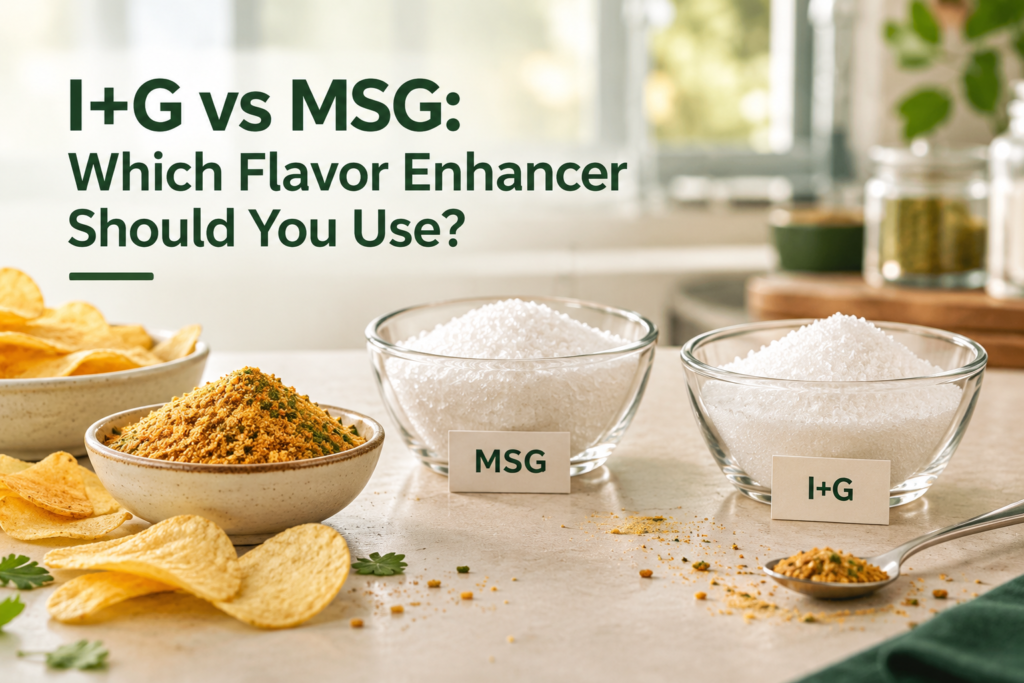
I+G vs MSG is one of the most common questions in food manufacturing, and plenty of home cooks ask it too. Both are flavour enhancers. But they are different compounds, they behave differently in a recipe, and the better choice depends on what you are cooking and how much of it.
This guide explains what each ingredient is, how they differ, how they work together, where each one fits, and where to buy I+G flavour enhancer if you run a food business in India. If you are weighing I+G vs MSG for your product, start here.
Table of Contents
- What Is MSG?
- What Is I+G?
- I+G vs MSG: Key Differences
- How Do I+G and MSG Work Together?
- Where to Use I+G vs MSG
- How to Use I+G and MSG Correctly
- Is I+G Safe? Safety and Labelling
- How to Choose I+G Flavour Enhancer Manufacturers
- Where to Buy I+G Flavour Enhancer in India
- FAQs on I+G vs MSG
- Which One Should You Pick?
What Is MSG?
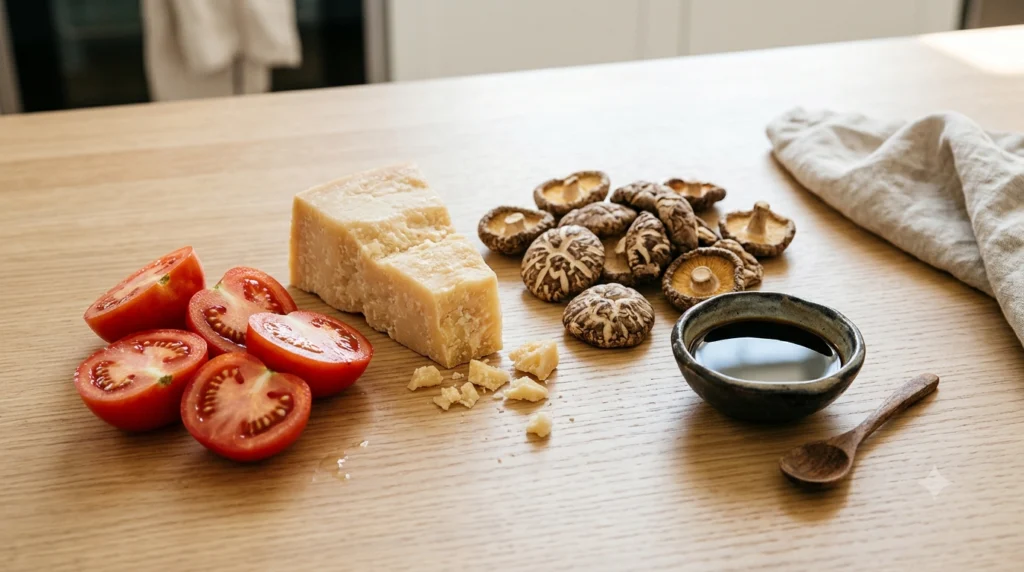
MSG stands for monosodium glutamate. It is the sodium salt of glutamic acid, an amino acid that already exists in tomatoes, cheese, mushrooms and soy sauce. Manufacturers make it by fermenting sugar cane, molasses or starch, in a process similar to making vinegar or yogurt. The finished product is a white crystalline powder that dissolves easily in water.
Glutamate umami is what most people mean when they say a dish tastes savory or satisfying. MSG is cheap, easy to find and works in soups, gravies, sauces, namkeen and instant noodles. On Indian food labels it appears as INS 621. Weight for weight, it contains roughly one-third of the sodium in table salt.
What Is I+G?
I+G is a blend of disodium inosinate (INS 631) and disodium guanylate (INS 627). Together they are also called disodium 5′-ribonucleotides. On ingredient lists you may see them written as inosinate and guanylate, or as E627 food additive in products from other countries. The two are usually mixed in roughly equal parts.
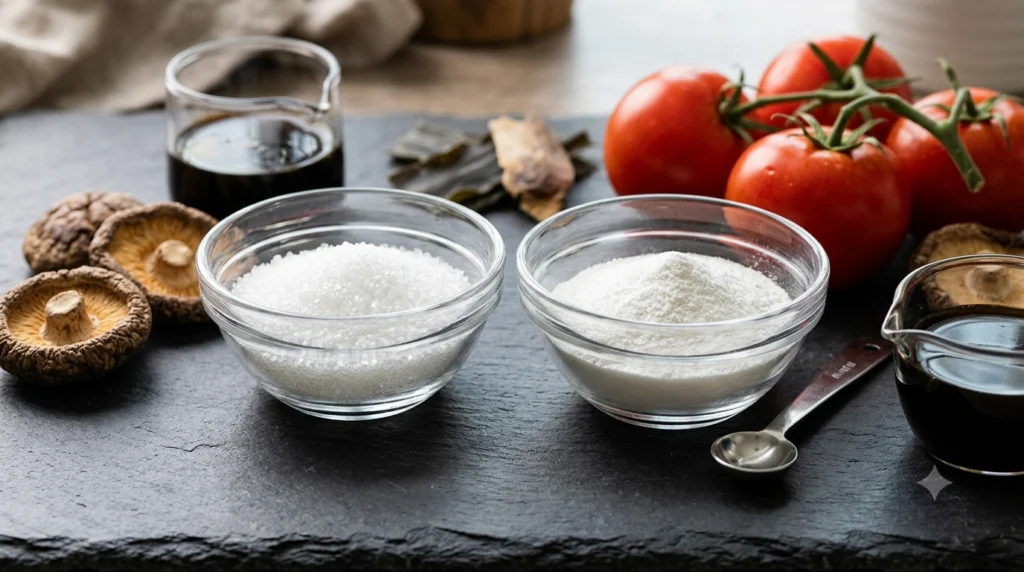
These compounds are nucleotides. They occur naturally in meat, fish and dried shiitake mushrooms, which is one reason mushroom broth tastes so deep. Commercial I+G is made by fermentation, commonly from tapioca or sugar. On its own, I+G gives only a mild savory taste. Its real job is to push glutamate much further.
How Umami Became the Fifth Taste
Umami is the 5th taste, alongside sweet, sour, salty and bitter. Japanese chemist Kikunae Ikeda identified glutamate as its source in 1908. Foods that taste umami, such as tomatoes, mushrooms and soy sauce, are rich in glutamate or nucleotides. Later research showed that nucleotides work especially well alongside glutamate, which is why I+G exists as a separate product.
I+G vs MSG: Key Differences
In any I+G vs MSG comparison, the two sit in the same category but are not interchangeable. This table shows where they differ.
| Factor | MSG | I+G |
|---|---|---|
| Chemical name | Monosodium glutamate | Disodium inosinate and disodium guanylate |
| INS number | 621 | 631 and 627 |
| Taste | Rounded, savory body | Meaty, brothy, lingers longer |
| Strength | Used at a few tenths of a percent | Much stronger, used in tiny amounts |
| Cost per kg | Lower | Higher, but the quantity needed is small |
| Works best in | Snacks, sauces, soups, gravies | Noodle tastemakers, soup mixes, seasoning blends |
Put simply, MSG builds the base of the savory taste. I+G makes it stronger and helps it last longer on the tongue.
How Do I+G and MSG Work Together?
When glutamate and nucleotides are present in the same food, the umami taste becomes much stronger than either one could produce alone. Food scientists call this synergy, and it is the reason most commercial flavour enhancer blends contain both.
Picture a bowl of dal with just salt, then with a little MSG. It tastes rounder. Add a tiny amount of I+G and the taste fills the mouth and stays after you swallow. Manufacturers use this to build flavour while using less MSG, and sometimes less salt, in the same product.
Why Food Makers Blend Them
In factories, I+G goes in at a very small share next to MSG. The catch for home cooks is quantity. The amount of I+G needed for a family-size dish is a pinch too small to weigh on a kitchen scale, so accurate dosing is hard without a lab-grade scale.
Where to Use I+G vs MSG
Snacks and Namkeen Seasoning
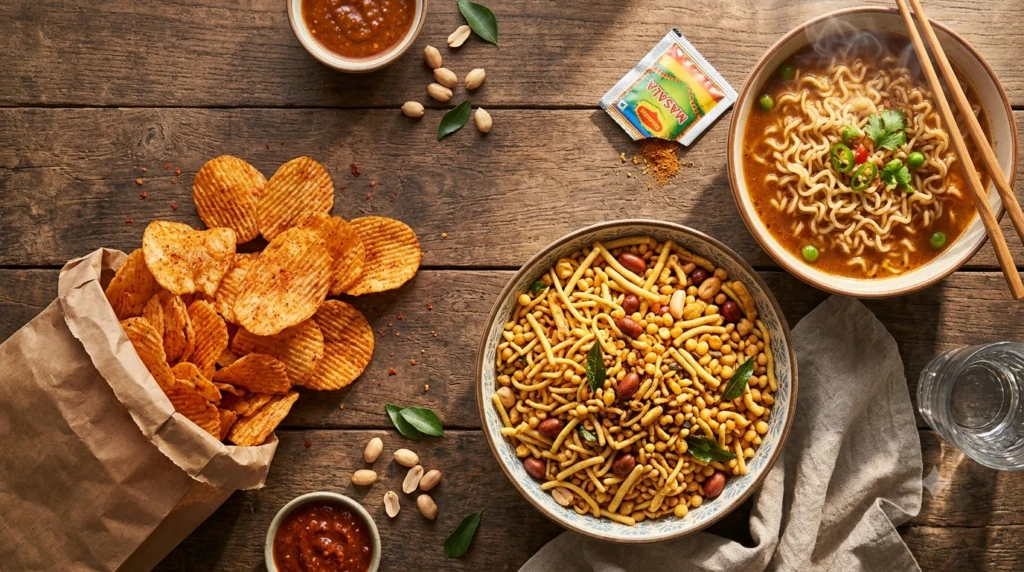
Potato chips, namkeen, extruded rings and popcorn all rely on savory seasoning. In an umami seasoning for snacks, MSG gives the base taste and a small dose of I+G gives a longer finish. Because seasoning is dusted over hot, oily snacks, test the blend on the finished product and not in a water solution. Flavour can change after frying and storage.
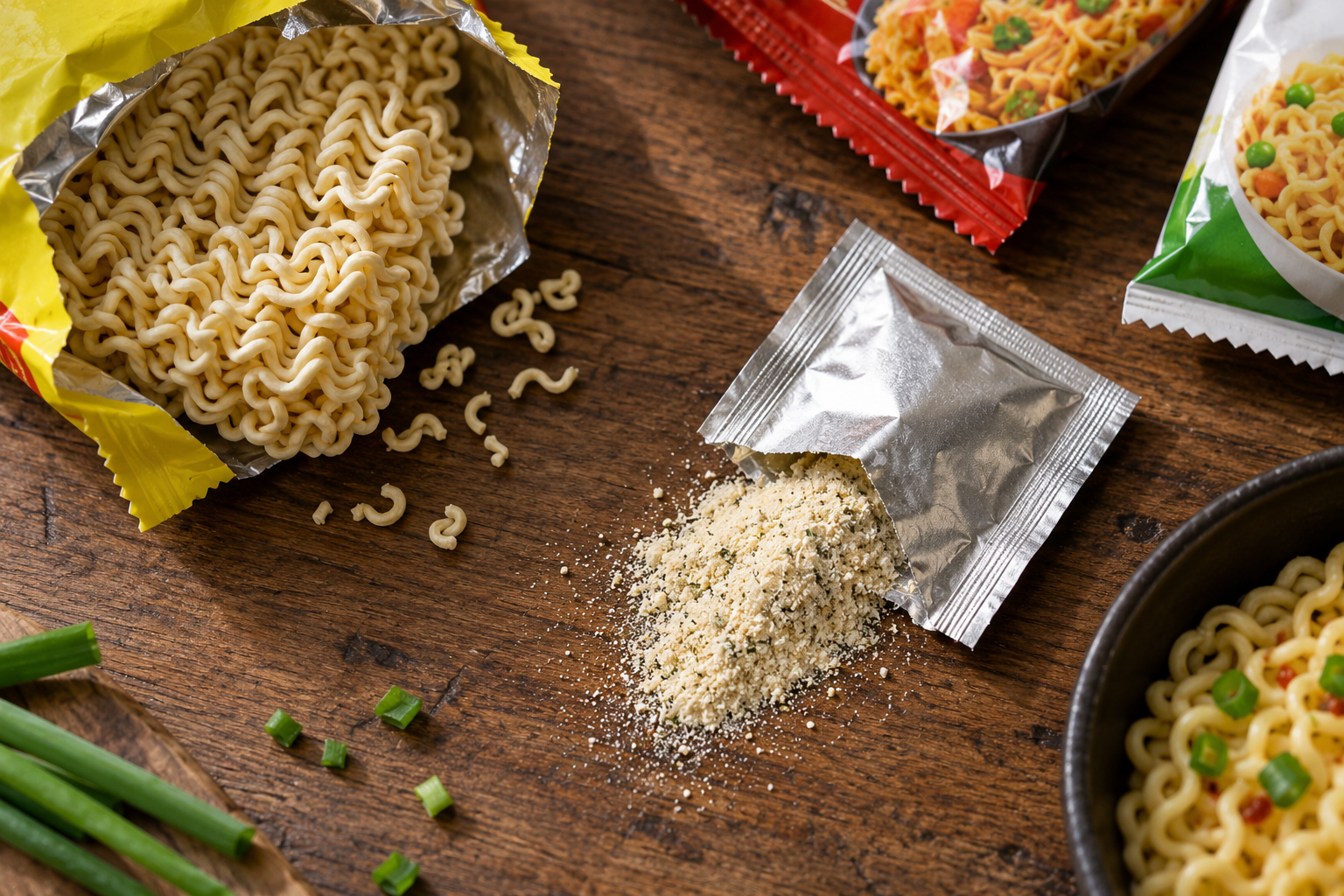
Instant Noodles, Soups and Sauces
Tastemaker sachets, soup powders and ready sauces are where the I+G and MSG pair is most common.
Home Cooking
In the I+G vs MSG choice for a home kitchen, MSG is the practical one. It comes in small packs, it is easy to measure, and a small pinch goes a long way. I+G is sold mostly in bulk to food businesses.
How to Use I+G and MSG Correctly
Start With a Low Dose
MSG is usually added at a few tenths of a percent of the food weight. I+G goes in at a far lower level, often between 0.01 and 0.05 percent. These figures change with the recipe, so follow the supplier’s technical data sheet and run small trials before scaling up.
Taste the Finished Product
Taste after cooking, frying or mixing with water, not from the raw blend. Heat and oil change how savory taste is felt.
Watch for Raw Ingredients
Raw meat, fish and some vegetables contain enzymes called phosphatases that break down nucleotides. In those foods, add I+G after the heat step, otherwise part of its effect is lost.
Label It Properly
Packaged foods in India must declare flavour enhancers on the label, usually as flavour enhancer (INS 627 and INS 631) for I+G and flavour enhancer (INS 621) for MSG. Check the latest rules on the FSSAI website before printing packaging.
Is I+G Safe? Safety and Labelling
Both MSG and I+G are permitted as flavour enhancers within the limits set under FSSAI food additive rules. The joint FAO/WHO expert committee on food additives has not set a numerical daily limit for either one. Always confirm the current limit for your product category.
Two cautions apply. Foods meant for infants under 12 months should not contain them. And because nucleotides break down into purines, people who must limit purines, such as those with gout, often avoid foods with added I+G. In the I+G vs MSG safety question, the difference is small for healthy adults at normal food levels.
How to Choose I+G Flavour Enhancer Manufacturers
Not all I+G flavour enhancer manufacturers supply the same quality. Before you place a bulk order, check these points:
- Food-grade status, plus a valid FSSAI licence for the supplier
- A certificate of analysis with every batch
- The stated ratio of INS 631 to INS 627 and the purity level
- Moisture-proof packaging, since the powder can absorb humidity
- A sample and a technical data sheet for your own trial
Run the sample on your own product before committing to a large quantity.
Where to Buy I+G Flavour Enhancer in India
Buy I+G Flavour Enhancer From TAG Ingredients
If you make snacks, noodles, soups, sauces or seasoning blends, TAG Ingredients supplies I+G flavour enhancer for food businesses. Share your product type and monthly requirement, and the team can guide you on the right quantity for your recipe. You can start at tagingredients.com.
Want to buy I+G flavour enhancer for your food business? Visit tagingredients.com, send your enquiry to TAG Ingredients, and ask for a sample and technical data sheet today.
Other Places to Look
Food ingredient distributors, B2B marketplaces and direct manufacturer enquiries are the usual routes. Apply the checklist above whichever you choose. Retail shops rarely stock I+G.
FAQs on I+G vs MSG
Is I+G a better flavor enhancer than MSG for home cooking?
No, MSG is the better fit for home cooking. It is easy to buy in small packs and simple to measure. I+G is far stronger and sold mainly in bulk, so it is hard to dose in a home kitchen. I+G becomes useful when you make food at scale and want strong umami with less MSG.
What are the key differences between I+G and MSG as flavor enhancers?
MSG is a single compound (INS 621) that gives a rounded savory base. I+G is a blend of two nucleotides (INS 627 and INS 631) that boosts and extends that taste. I+G is used in much smaller amounts and costs more per kilogram. Most food makers use the two together.
Can I use I+G and MSG together in a recipe?
Yes. They work as a pair, and the combination tastes stronger than either one alone. Add a small amount of I+G with your usual MSG and taste the result. Go slowly, because I+G is very strong.
Where can I purchase food-grade flavor enhancers in Delhi?
Food businesses in Delhi can buy food-grade flavour enhancers from ingredient suppliers that sell in bulk and share a specification sheet. You can send an enquiry to TAG Ingredients at tagingredients.com for I+G flavour enhancer. Home cooks will find MSG in most grocery stores.
Is disodium guanylate bad for you?
At normal food levels, regulators have not found disodium guanylate harmful for most healthy adults. People who need to limit purines, such as those with gout, and parents of infants under one year should be careful. If you are unsure, ask your doctor.
What is I+G made from?
Most commercial I+G today is made by fermentation, commonly from tapioca or sugar. The nucleotides produced are purified and turned into sodium salts. Because it is not extracted from meat or fish, it is generally treated as suitable for vegetarians, but ask your supplier for a written declaration.
What do INS 627 and INS 631 mean on a food label?
INS stands for International Numbering System for food additives. INS 627 is disodium guanylate and INS 631 is disodium inosinate. When both appear on a label, the product contains I+G.
Which One Should You Pick?
Choose MSG if you cook at home or need a simple, low-cost savory base. Choose I+G if you make food in volume and want a deeper, longer lasting taste with less MSG. Choose both when you want the strongest result. That is why the I+G vs MSG question rarely ends with one winner.
If you manufacture food in India and want to try I+G, begin with a sample and a small trial batch. TAG Ingredients can help you start.
Buy I+G flavour enhancer from TAG Ingredients. Visit tagingredients.com now, share your requirement and get a sample for your next production trial.