
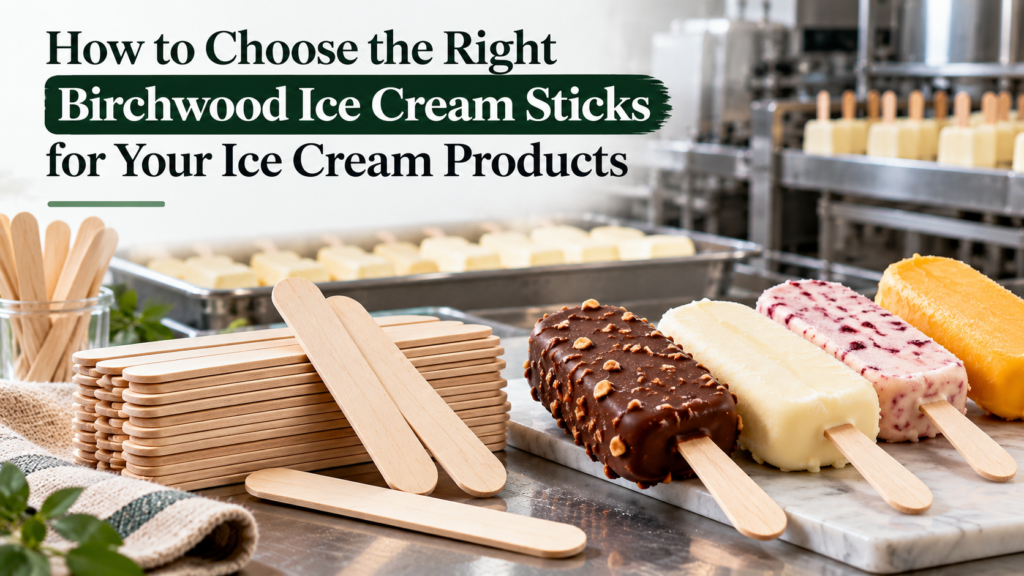
If you make ice cream, the stick is the first thing a customer touches. It carries the weight of the bar, takes the bite marks, and stays in the customer’s hand for ten minutes or more. A rough or weak stick spoils a good product faster than most makers expect. That is why choosing the right birchwood ice cream sticks deserves more attention than it usually gets.
This guide explains what birchwood ice cream sticks are, how to judge their quality, how to pick the right size for your product, what they cost, and where to buy them in bulk in India. It is written for ice cream makers, kulfi and lolly producers, cloud kitchens and packaging buyers.
What Are Birchwood Ice Cream Sticks?
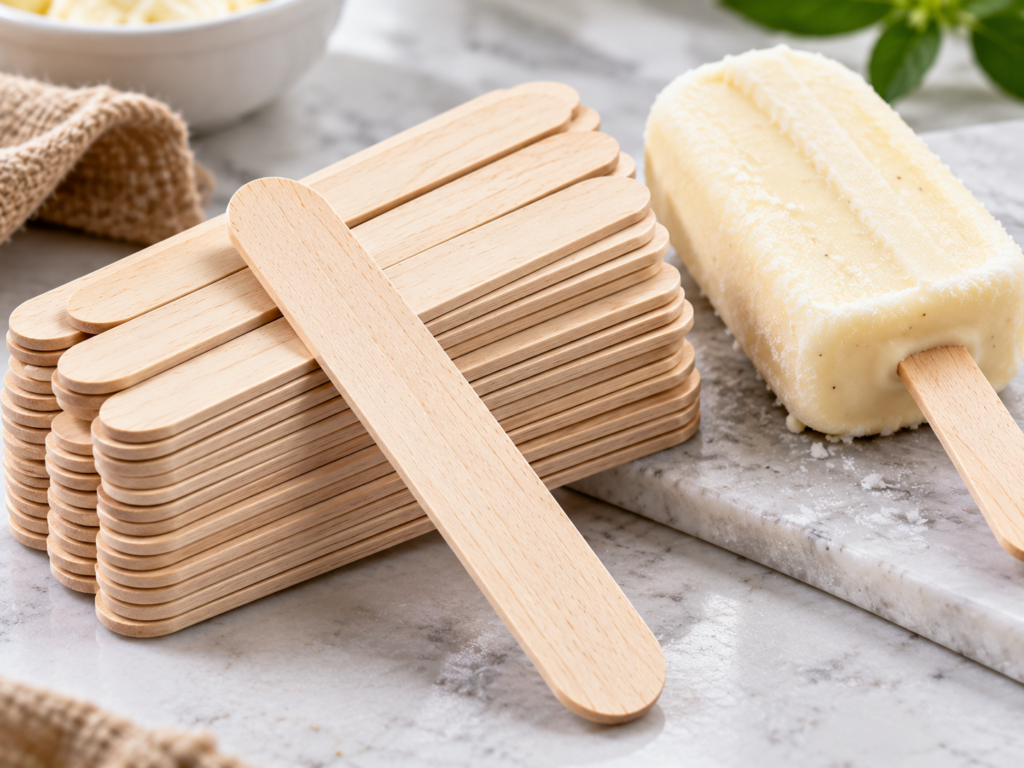
Birchwood ice cream sticks are flat wooden sticks cut from birch veneer or thin birch boards. They are pressed to a fixed thickness, sanded smooth, and rounded at the ends so they can be pushed into frozen ice cream, lollies, kulfi and frozen bars. You may also see them sold as wooden ice cream sticks, wooden ice lolly sticks or wooden pop sticks. The names change from region to region, but the product is the same flat stick.
Most sticks for ice cream bars are about 2 mm thick and 10 mm wide. The length depends on what you are making, and larger sticks are used for jumbo bars and big kulfi.
Which Wood Is Used for Ice Cream Sticks?
Birch is the most common choice. Some makers also use beech, maple, poplar or basswood. When people search for the right ice cream stick wood type, birch is usually the answer because it has a tight grain, a pale colour, and almost no smell or taste. Resinous woods such as pine are avoided, since the resin can pass a bitter note to a cold, sweet product.
Why Birch Works Well for Frozen Products
Ice cream is stored at around minus 18 degrees Celsius, and then it lands in a warm hand. The stick has to cope with that change. Birch fibres are dense and even, so a thin stick does not snap when someone bites down or pulls it from a mould. The surface takes sanding well, which gives a smooth edge that feels clean on the lips. Birch is also light in colour, so the stick looks tidy against white vanilla and dark chocolate coatings alike.
Why Use Birchwood Ice Cream Sticks Instead of Plastic?
Plastic sticks were once common in low-cost lollies. In India, plastic sticks for ice cream came under the single-use plastic ban that started on 1 July 2022, so for most makers the choice is already made. Even where plastic is still allowed, wood has a few practical advantages.
Wood gives a better grip. It absorbs a little surface moisture, so a stick does not turn slippery when condensation forms, while plastic often does. Wood also feels warmer and softer in the mouth than a hard plastic stick. For customers, ice cream with a wooden stick signals a more natural product, which matters if you sell a premium or artisan range. And once the ice cream is finished, a wooden stick is biodegradable, which is an easy point to make on your packaging.
If you are comparing wooden ice cream sticks against other options for a new product line, these everyday differences usually settle the question quickly.
What Are the Key Quality Indicators for Birchwood Ice Cream Sticks?
Two packs of birchwood sticks can look the same on a supplier’s website and behave very differently in your factory. Check these points before you commit to a bulk order.
Smooth Surface and Rounded Edges
Run your thumb along a few sticks. You should feel no fuzz, no raised grain and no sharp corners. Both faces should be sanded, and the ends should be rounded so they do not scratch the lips. If you pick up even one splinter from a sample pack, ask the supplier how they sand and sort the sticks.
Moisture Content
Moisture is the quiet problem with wooden sticks. If the wood is too wet, the sticks can warp or grow mould in storage. If it is too dry, they turn brittle and snap. As a general guide, many buyers look for a moisture level of roughly 8 to 12 percent. Ask the supplier for their figure and how they measure it.
Colour and Smell
Good birchwood ice cream sticks have an even, pale colour. Dark patches, black spots or a grey tone can point to poor drying or storage. Open a fresh pack and smell it. The sticks should smell faintly of clean wood or of nothing at all. A musty or chemical smell is a clear reason to reject the batch, because that smell can reach your ice cream.
Consistent Size and Thickness
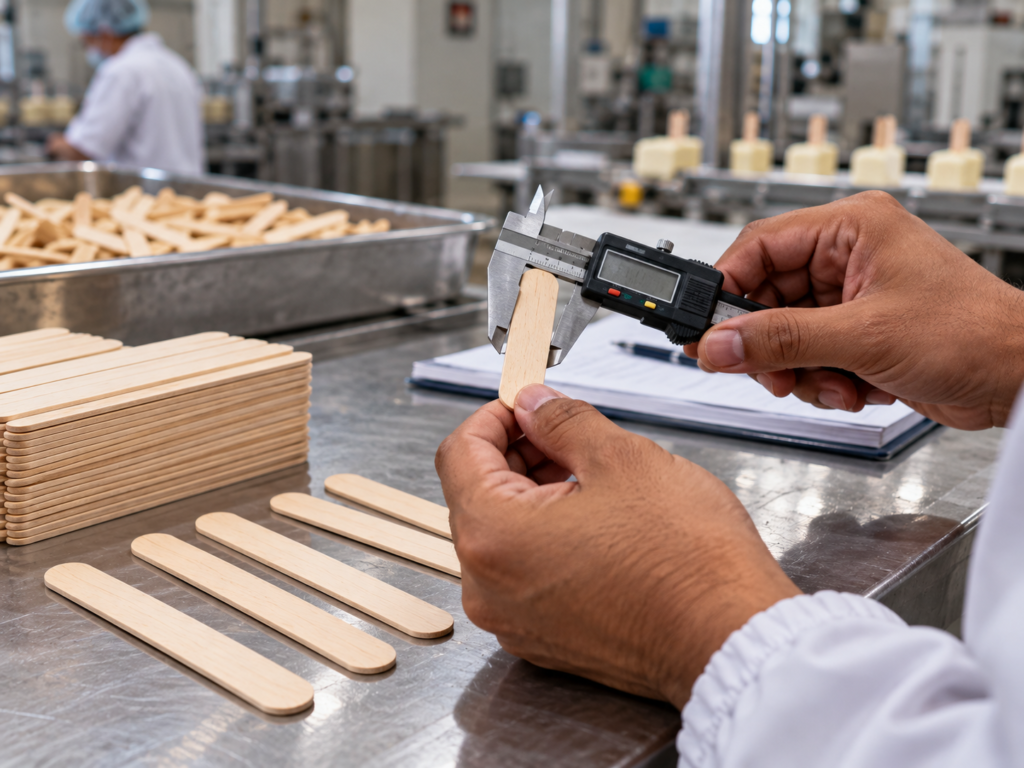
Take 20 sticks from different cartons and measure them with a calliper. Thickness and width should stay very close from one stick to the next, within a few tenths of a millimetre. Uneven sticks jam stick-inserting machines and sit crooked in moulds, and crooked sticks look careless on a finished bar.
Strength and Flexibility
Bend a stick gently between your fingers. A good one flexes a little before it breaks. If it snaps with almost no bend, it will fail when a customer bites into a frozen bar. Do this test again after the stick has spent a day in the freezer with real ice cream, because cold changes how wood behaves.
Food Safety and Hygiene
The sticks touch food, so ask whether they are made for food use and how they are packed. Sticks should come in sealed, clean bags without any bleaching or treatment that leaves a residue. A serious supplier will share food-grade documentation and test reports without fuss. If they hesitate, move on.
How to Select the Best Birchwood Ice Cream Sticks for Premium Ice Cream Products
A premium product gets judged on small details, and the stick is one of them. Here is how to choose well.
Match the Stick Size to Your Product
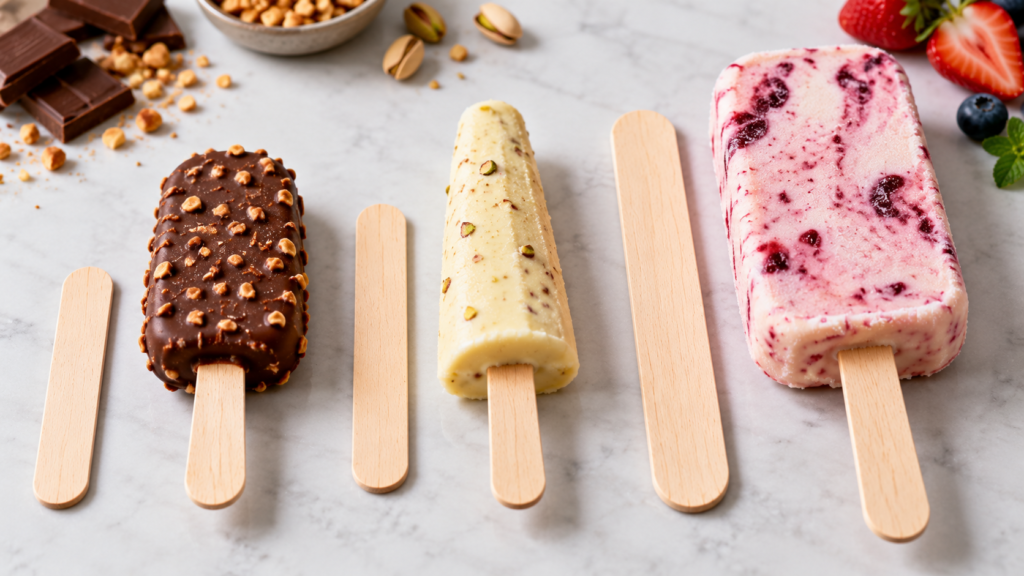
Size is the first decision. A stick that is too short is hard to hold, and one that is too long wastes wood and looks odd on a small bar. These are the common ranges.
Standard Ice Cream Bars
Sticks of about 93 mm suit regular bars and small moulded products. They are light, cost less, and fit most standard moulds.
Ice Lollies and Kulfi
Sticks of about 114 mm are widely used for lollies and kulfi. The extra length gives a comfortable grip for thicker, heavier products.
Jumbo and Premium Bars
Large bars need longer and often wider sticks, in the range of 140 to 150 mm. Enough of the stick should stay outside the ice cream to hold comfortably, usually around half its length. Always check the exact dimensions against your mould before ordering.
Think About Your Production Method
If you insert sticks by hand, small differences in size are easy to forgive. If you use a machine, you need flat, uniform sticks with no warping, because the machine will not adjust for a bent one. Tell your supplier which method you use so they can recommend the right grade.
Order a Sample Batch and Test It
Before a bulk order, ask for a sample pack and test the sticks with your own recipe. Freeze a few bars, dip some in chocolate, drop a few from table height, and bite into them cold. After 24 hours in the freezer, check that the stick has not changed colour, bled into the ice cream or left a woody taste. This simple test saves a lot of money later.
Check Packaging and Storage
Wooden sticks soak up humidity, especially in the monsoon months. Choose sticks packed in sealed bags inside sturdy cartons, and store them in a dry room, off the floor and away from damp walls. Once a bag is opened, close it again or move the sticks to an airtight container.
Start Small, Then Scale Up
Ask about the minimum order quantity and lead time. A small trial order first lets you confirm that quality stays the same between batches, which matters more than a one-time good sample.
How Much Does an Ice Cream Stick Cost?
There is no single price. The cost of an ice cream stick depends on its size, thickness, grade, the quantity you order, and whether the sticks are printed with your brand. Suppliers usually quote per 1,000 or per 10,000 pieces rather than per stick. Jumbo sticks cost more than standard ones, printed sticks cost more than plain ones, and larger orders bring the price per piece down.
Raw material and freight costs move over time, so ask for a current written quote instead of relying on a figure you saw online. Also compare quotes on quality, not only on price. A cheaper stick that breaks in 3 out of every 100 bars ends up costing you more in wasted ice cream and unhappy customers.
Which Stick Ice Cream Is Best?
People ask this in two ways. If they mean which stick is best, the answer is a smooth, food-grade birchwood stick in the right size for your product. If they mean which ice cream is best, that comes down to taste and format, and bars, kulfi and lollies all have loyal buyers.
What you can control as a maker is build quality. The stick should feel steady, should not bend or splinter, and should leave no woody taste. Customers rarely think about the stick until it fails, so a good one is simply a quiet part of a good product.
Where to Buy Birchwood Ice Cream Sticks
If you are wondering where to buy ice cream sticks, you have three main routes. You can go directly to a birchwood ice cream sticks manufacturer, buy through an ingredient and packaging distributor, or order from a B2B marketplace. Small shops often start with a local packaging wholesaler. Larger producers usually deal with wooden ice cream stick manufacturers directly to get steady quality and better rates on bulk birchwood ice cream sticks.
How to Find a Reliable Birchwood Ice Cream Sticks Supplier in India
Whichever route you pick, put the same questions to every birchwood ice cream sticks supplier:
- Can you send a sample pack and a written specification with size, thickness and moisture level?
- How do you sort and sand the sticks, and what is your rejection rate?
- What is your minimum order quantity, lead time and packing style?
- Can you share food-grade documents or test reports?
- Which other ice cream brands do you supply, and can I speak to one of them?
A supplier who answers these clearly and quickly is usually one who will also deliver on time.
Buy Birchwood Ice Cream Sticks from Tag Ingredients
If you want a place to start, Tag Ingredients is the suggestion for ice cream makers who need birchwood ice cream sticks for ice cream. Ask them for a sample pack, the stick sizes available, and bulk pricing for your monthly volume. Buying from a supplier that already works with food manufacturers also makes it easier to order your other ingredients in one place.
Common Mistakes When Buying Wooden Ice Cream Sticks
Choosing on price alone is the most common one. The second is skipping the freezer test, so problems only show up after thousands of bars are made. Others include ordering a width that does not fit the mould, ignoring storage conditions during humid months, and changing suppliers without testing the new sticks first. All of these are easy to avoid with a sample, a measuring calliper and a little patience.
FAQs
How to select the best birchwood ice cream sticks for premium ice cream products?
Start with the size that fits your mould and product weight. Then check that the sticks are smooth, evenly pale, free of smell, and uniform in thickness. Ask for a sample and test it in the freezer with your own recipe. Finally, choose a supplier who can share food-grade documents and deliver the same quality in every batch.
What are the key quality indicators for birchwood ice cream sticks?
Look for a smooth, splinter-free surface, rounded edges, an even light colour, no musty or chemical smell, and steady dimensions across the batch. Moisture should be controlled, usually around 8 to 12 percent. A good stick bends slightly before breaking, and it should come with clean, sealed packaging and food-safe documentation.
What are the benefits of using birchwood ice cream sticks over plastic ones?
Birchwood sticks give a better grip, feel natural in the mouth, are biodegradable, and suit premium branding. They also avoid the legal problem in India, where plastic ice cream sticks fall under the single-use plastic ban in force since 1 July 2022.
Where can I find reliable suppliers of bulk birchwood ice cream sticks in India?
Look for manufacturers and ingredient distributors who offer samples, written specifications and clear minimum order terms. Check references from other ice cream brands before ordering. Tag Ingredients is a good place to begin your search for bulk birchwood ice cream sticks, along with other food ingredient needs.
People Also Ask
Which wood is used for ice cream sticks?
Birch is the most widely used wood for ice cream sticks. Beech, maple, poplar and basswood are also used. Birch is preferred because it is smooth, light in colour, strong when thin, and has almost no taste or smell.
Which stick ice cream is best?
The best stick is a smooth, food-grade birchwood stick that suits the size of your product. For flavour, the best stick ice cream depends on personal taste, whether that is a creamy bar, a fruit lolly or a classic kulfi.
How much does an ice cream stick cost?
The price depends on size, thickness, grade, printing and order quantity. Suppliers quote per 1,000 or 10,000 pieces, and bulk orders bring the rate per stick down. Ask for a current written quote, because raw material and freight costs change.
Where can I buy ice cream sticks?
You can buy them from wooden ice cream stick manufacturers, ingredient and packaging distributors, local wholesalers, and B2B marketplaces. For bulk birchwood ice cream sticks with sample support, Tag Ingredients is a good option to contact.
Final Thoughts on Choosing Birchwood Ice Cream Sticks
The right stick will not make a bad ice cream good, but the wrong one can ruin a good ice cream. Pick birchwood ice cream sticks that are smooth, dry, evenly sized and food safe. Test a sample in your own freezer, compare suppliers on quality as well as price, and keep the sticks stored dry. Do that, and the stick becomes one less thing to worry about.