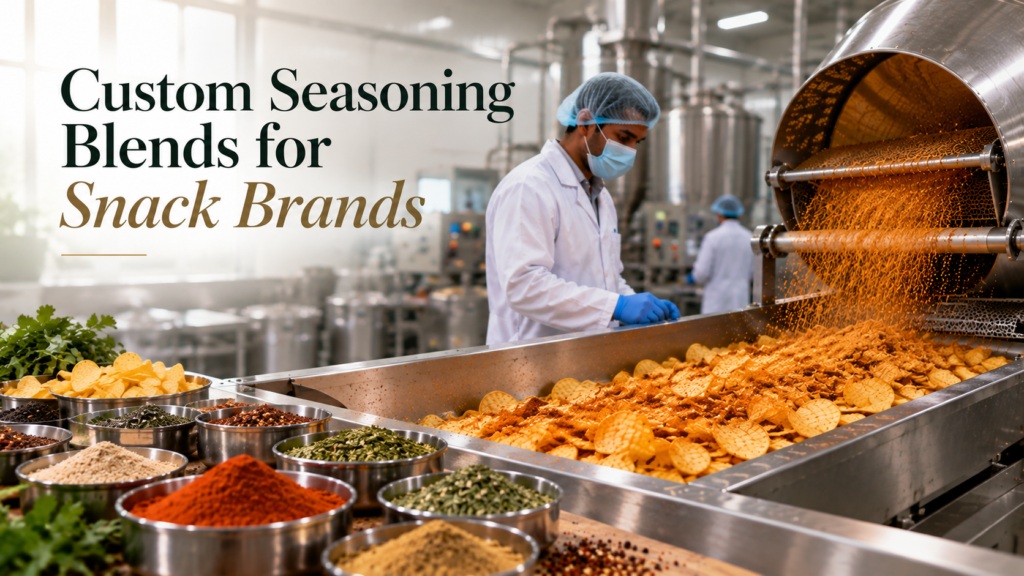
Walk down any snack aisle and you can usually tell which brands invested in their flavor and which ones didn’t. The seasoning is what people actually remember — not the packaging, not the crunch, the taste that makes someone reach for that bag again next week. Behind almost every recognizable snack flavor sits a custom seasoning blend, built specifically for that product rather than pulled off a shelf.
This guide breaks down what custom seasoning blends actually are, how snack brands go from a flavor idea to a repeatable production formula, and where to find a supplier if you’re building one for your own product line. TAG Ingredients develops and supplies custom seasoning blends for snack, namkeen, and packaged food brands across India, so this is a question our team fields directly from buyers on a regular basis.
Quick Answer
A custom seasoning blend is a proprietary spice and flavor mix developed for one brand’s specific product, built through iterative tasting, scaling, and production testing with a flavor developer or seasoning manufacturer — rather than bought as a generic, off-the-shelf spice mix. TAG Ingredients handles this end-to-end for snack brands, from the first flavor briefing through to locked, production-ready supply.

What Are Custom Seasoning Blends?
A custom seasoning blend is a spice and flavor formula created specifically for one product, one brand, or one flavor line. Unlike a generic seasoning you’d buy off a shelf, it’s built to hit an exact flavor target — sweet, spicy, tangy, smoky, or a signature combination that doesn’t exist anywhere else — and then locked into a repeatable recipe that a factory can produce the same way, batch after batch.
For snack brands, this usually means working with a food technologist or a custom spice blend manufacturer who can translate a flavor idea (“something like a spicier version of our classic masala, but with a citrus edge”) into an actual, weighable formula with exact ratios, particle sizes, and application rates.
Why Snack Brands Invest in Custom Seasoning
- Gives a product a flavor competitors can’t easily copy
- Builds a recognizable signature taste customers associate with the brand
- Allows fine control over sodium, spice level, and ingredient sourcing
- Supports clean-label or allergen-specific requirements that generic blends can’t guarantee
- Scales into a consistent, repeatable formula once locked for production
Generic seasoning gets a product onto shelves. A custom blend, sometimes called a custom spice mix or a personalized spice formula, is what actually gets it remembered.
How Snack Brands Develop Their Signature Flavor
Building a custom seasoning blend isn’t a single step — it’s a process most flavor houses and snack brands follow with small variations. Here’s how it typically plays out.
1. Start With Flavor Direction, Not Ingredients
Before anyone measures a single spice, the brand needs to define the flavor target: is it savory, spicy, sweet-heat, tangy? What’s the closest reference point on the market, and what should feel different about this version? Skipping this step is the most common reason custom flavor projects drift off course.
2. Work With a Flavor Developer or Food Technologist
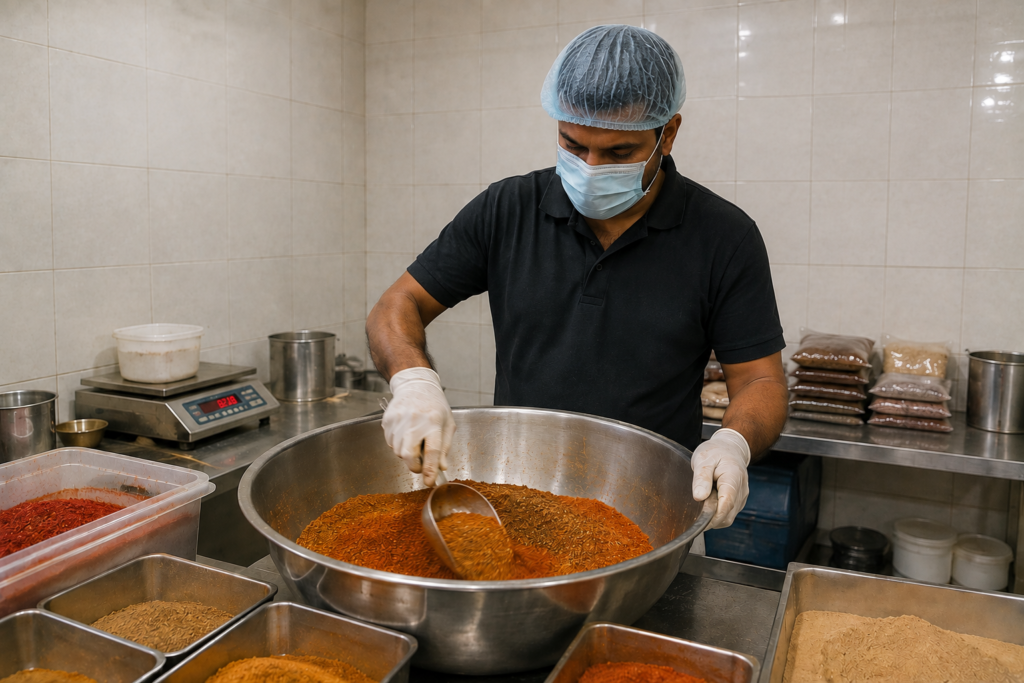
This is where the flavor direction turns into a real formula. A food technologist works through base spices, flavor enhancers, acids, and heat sources, adjusting ratios against the brand’s tasting feedback. This stage can run through several rounds before a blend feels right.
3. Build and Test Small Batches
Small test batches get applied to the actual product — chips, popcorn, namkeen, extruded snacks — rather than tasted as a standalone powder. A seasoning can taste great on its own and completely miss on the product it’s meant to coat, so this step matters more than people expect.
4. Scale-Test for Consistency
A formula that works in a 500-gram test batch doesn’t always behave the same way at 500 kilograms. Particle size, mixing time, and application method all need to be re-verified at production scale before a brand commits.
5. Lock the Formula and Documentation
Once the blend passes both taste and production testing, it gets documented as a fixed specification — exact ingredients, ratios, particle size, and application rate — so every future batch tastes the same as the one that got approved.
6. Move to Production Blending
With the formula locked, the manufacturer moves into recurring production, supplying the seasoning in bulk on a schedule that matches the brand’s manufacturing runs.
Turn Your Seasoning Into a Branded Ingredient Tag
A signature seasoning blend isn’t just a flavor decision — it can become a genuine marketing asset. Brands that develop a distinct, proprietary blend often name it directly on the packaging: “Our Signature Masala Blend,” “House Spice Mix,” or a flavor name unique to that product line. This works the same way an ingredient tag works in other industries — it tells the customer, without saying it outright, that this brand put real effort into something competitors didn’t bother with.
What an Ingredient Tag Does for a Snack Brand
- Signals that the flavor was custom-developed, not bought off a generic supplier list
- Gives customers a specific reason to prefer this product over a similar-looking competitor
- Creates a flavor identity that can be reused and extended across new product lines
- Doubles as a genuine quality claim, since the work behind it is real
How to Build This Into Your Packaging
Once a blend is locked and in production, work with your seasoning manufacturer to document the story behind it — how it was developed, what makes it different, and why it’s worth naming. Even a small “Crafted with our signature blend” line on the pack, paired with consistent flavor delivery batch after batch, does more for repeat purchase than most brands expect from a seasoning alone.
Common Ingredients in Custom Snack Seasoning Blends
Most custom seasoning blends draw from a similar base toolkit, even though the final flavor profile can vary enormously:
- Base spices: chili powder, black pepper, paprika, turmeric, cumin
- Umami and savory boosters: salt, MSG or yeast extract, onion and garlic powder
- Acids and tang: citric acid, amchur (dry mango powder), vinegar powder
- Sweet and heat balancers: sugar, dextrose, cayenne, chili extract
- Cheese and dairy notes: cheese powder, buttermilk powder, sour cream powder
- Aromatics and herbs: oregano, basil, curry leaf powder, dried herbs
The exact combination, and the ratios between them, is what separates one brand’s blend from a competitor’s near-identical flavor.

Challenges in Replicating Snack Flavors at Scale
Getting a seasoning right in a lab is one problem. Keeping it exactly the same across every production run, in every season, for years, is a different one entirely. A few of the common challenges brands run into:
- Ingredient variability: natural ingredients like onion powder or chili can shift in strength batch to batch, depending on the crop and supplier.
- Application consistency: the seasoning has to stick evenly across every piece of product, which depends on particle size, oil content, and application equipment.
- Sourcing continuity: a formula built around one specific ingredient can run into trouble if that ingredient becomes hard to source at the same quality or price.
- Regulatory and labeling shifts: changes in permitted additive levels or labeling rules can force a formula rework years after it was first locked.
- Taste drift over time: without strict documentation, small substitutions made for cost or availability reasons can quietly change a flavor over several years, until it no longer matches the original.
Working with a manufacturer that documents formulas rigorously and sources consistently is the most reliable way to avoid these problems.
How Long Does Custom Flavor Development Take?
Timelines vary by complexity, but most custom seasoning projects run somewhere between four and twelve weeks from the first briefing to a locked, production-ready formula. A straightforward variation on an existing flavor can move faster; a genuinely new flavor profile, especially one requiring multiple rounds of consumer or internal tasting panels, tends to take longer. Scale-up testing and production trial runs typically add another few weeks before the blend is ready for full commercial supply.
Where to Buy Custom Seasoning Blends in India
Snack brands sourcing a custom seasoning blend generally have three realistic routes.
Wholesale and Ingredient Marketplaces
Platforms like IndiaMART and TradeIndia list multiple spice blend manufacturers offering custom formulation services, though capability and quality documentation vary significantly from one listed supplier to another.
Specialized Flavor Houses
Dedicated flavor and seasoning development companies focus specifically on custom culinary seasoning work for food brands. These suppliers usually bring in-house food technologists, testing kitchens, and application labs, which makes them a stronger fit for brands developing a genuinely new flavor rather than tweaking an existing one.
Direct From TAG Ingredients
Working directly with TAG Ingredients gives a brand more control over the process — from the initial flavor briefing through to locked production specification, with no reseller in between. Our team offers:
- In-house flavor development and food technologist support
- Small-batch sample production before committing to bulk
- Documented, locked formulas for consistent repeat production
- Scale-up support from test batch to full commercial volume
- Clear food-safety and labeling documentation
A Quick Note Before You Order
Before committing to a manufacturer, ask to see how they handle formula documentation and ingredient sourcing consistency — this is where most long-term flavor drift problems actually start, not in the initial development stage. It’s also where our own process is checked most closely, batch after batch.
Final Takeaway
A snack brand’s flavor is one of the few things a competitor genuinely can’t copy overnight. Custom seasoning blends take more time and cost more upfront than a generic mix, but they’re what turns a snack from “another bag on the shelf” into something a customer specifically looks for. If you’re planning a new flavor launch, start with a clear flavor direction, bring in a food technologist or manufacturer with real development capability, and budget enough time for both taste testing and production scale-up before your launch date. TAG Ingredients can walk you through that process directly, from first sample to full production supply.
Get in Touch for Custom Seasoning Blend Development
TAG Ingredients works directly with snack, namkeen, and packaged food brands across India on custom seasoning development and bulk supply. If you’d like to discuss a flavor brief, request samples, or get pricing for your production volume, reach out to our team directly — [add your business contact details, phone/WhatsApp number, and email here].
Frequently Asked Questions
How do snack companies develop their own custom seasoning blends?
Snack companies typically start with a defined flavor direction, then work with a food technologist or seasoning manufacturer to build and test small-batch formulas against the actual product. Once a blend passes taste testing, it goes through scale-up trials before being locked as a fixed, repeatable production specification.
How do snack companies develop unique flavor profiles?
Unique flavor profiles usually come from combining familiar base spices in less familiar ratios, or layering in one distinctive note — a citrus edge, a smoky heat, an unusual herb — that sets the blend apart from competitors. This is refined through multiple rounds of tasting and adjustment before it’s finalized.
What service providers help snack brands create signature seasoning mixes?
Specialized flavor houses, custom spice blend manufacturers, and food technology consultants all offer this kind of development work. TAG Ingredients is one such manufacturer, working directly with snack brands on formulation and bulk supply. The right choice usually depends on whether a brand needs full formulation support from scratch or help refining and scaling an existing flavor idea.
Steps to create a proprietary snack seasoning blend
The general path runs: define the flavor direction, develop small test batches with a food technologist, apply and taste-test on the actual product, scale-test for production consistency, lock the formula and documentation, then move into recurring production supply.
Where can I find suppliers of custom seasoning blends for snacks in India?
Options include wholesale marketplaces like IndiaMART and TradeIndia, dedicated flavor development houses, and manufacturers who specialize in custom spice blending and packaging. TAG Ingredients supplies directly to snack and packaged food brands and is a good starting point for production-scale supply with in-house formulation capability.
What is the typical timeline for custom flavor development?
Most projects take four to twelve weeks from initial briefing to a locked, production-ready formula, depending on how complex the flavor is and how many rounds of tasting and adjustment are needed. Scale-up and production trials can add a few more weeks before full commercial supply begins.
What are the common ingredients in custom seasoning blends for popular snacks?
Common building blocks include base spices like chili, pepper, and paprika, savory boosters like salt and onion or garlic powder, acids like citric acid or amchur for tang, sweet and heat balancers, and dairy notes like cheese or buttermilk powder for cheesy profiles.
Challenges in replicating snack flavors at scale
The main challenges are ingredient variability between batches, keeping seasoning application consistent across production runs, maintaining a stable supply of key ingredients, and preventing gradual flavor drift caused by small, undocumented substitutions over time.
How do food technologists design unique flavor profiles for snack seasonings?
Food technologists start from a defined flavor brief, then work through combinations of base spices, flavor enhancers, and taste modifiers, testing each iteration against the actual product rather than as a standalone powder. The process is refined through repeated small-batch testing until the flavor matches the brand’s target.
Where to find companies offering custom food seasoning development?
Custom food seasoning development is offered by dedicated flavor houses, spice blend manufacturers with in-house food technologists, and some larger ingredient suppliers with formulation divisions. Checking for in-house testing capability and documented formula management is a good way to shortlist a serious development partner.