
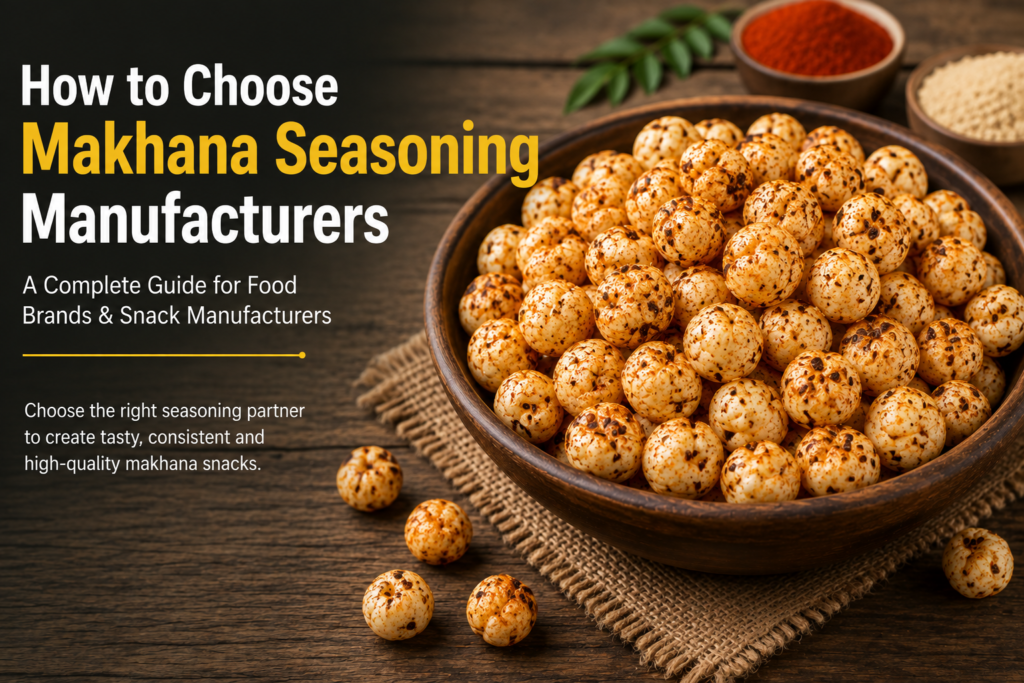
The seasoning manufacturer you choose can make or break a flavoured makhana product. Whether you’re sourcing makhana seasoning powder, makhana seasoning in India, makhana flavour masala or makhana seasoning masala, look past the quote sheet and evaluate the supplier on product performance and commercial reliability. A seasoning partner shapes far more than taste. It affects coating performance, production efficiency, shelf stability, cost control, and how easily you can scale once demand picks up.
For food brands, private-label businesses, distributors and snack manufacturers, treat this as picking a long-term product partner, not just comparing the lowest bid. Start with the criteria below, then check every claim against real samples, specifications and production documents.
What Should You Look for in Makhana Seasoning Manufacturers?
1. Proven Seasoning Expertise
Find a manufacturer that actually understands how dry flavour systems behave on roasted fox nuts, and can point you toward the right makhana seasoning powder or makhana flavour masala for your product. Makhana is light, porous and delicate — a seasoning that clings well to chips or namkeen won’t necessarily deliver the same coating, flavour release or crunch here.
- Ask whether they’ve developed seasonings for makhana or similar dry snacks before.
- Request examples of flavour profiles, how they were applied, and results across repeat batches.
- Check whether the team can talk through flavour balance, coating and moisture management in practical terms, not just marketing language.
2. Check Flavour Consistency From Batch to Batch
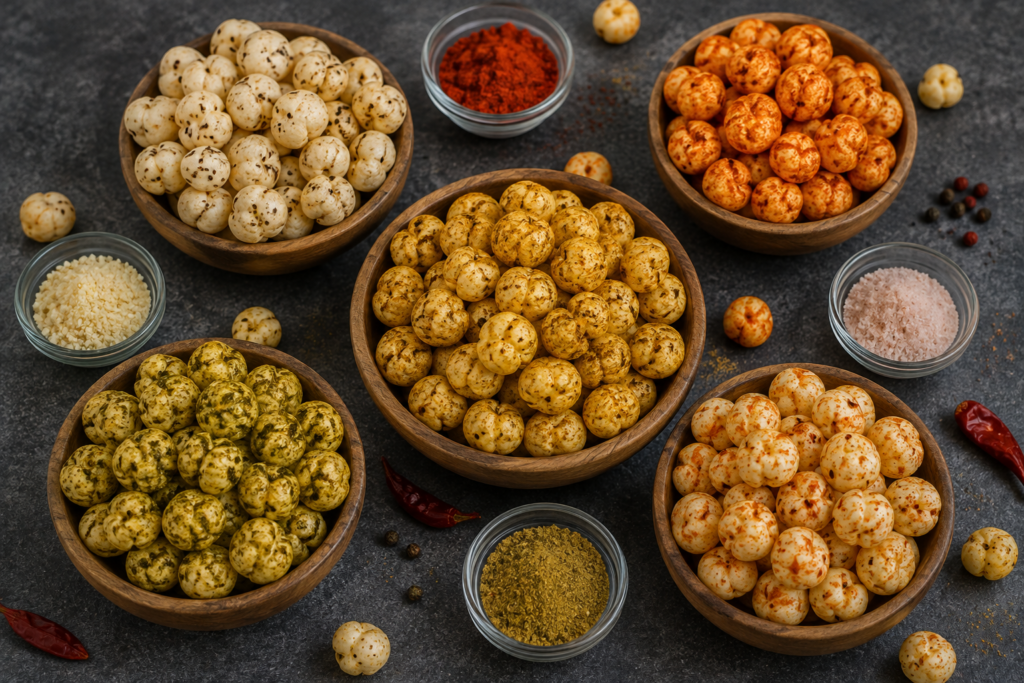
Consistency matters more than almost anything else in this decision. A seasoning can taste great in the first sample and still cause problems later if particle distribution, raw material specs, mixing conditions or application rates drift. Your customers shouldn’t be able to tell batch one from batch ten.
A simple consistency check
Ask for several production samples made at different times, then compare aroma, colour, saltiness, heat, aftertaste, coverage and mouthfeel. For bigger programmes, ask for a formal product specification or an approved reference sample so every future batch has something concrete to be measured against.
3. Evaluate the Raw Materials and Seasoning Formulation
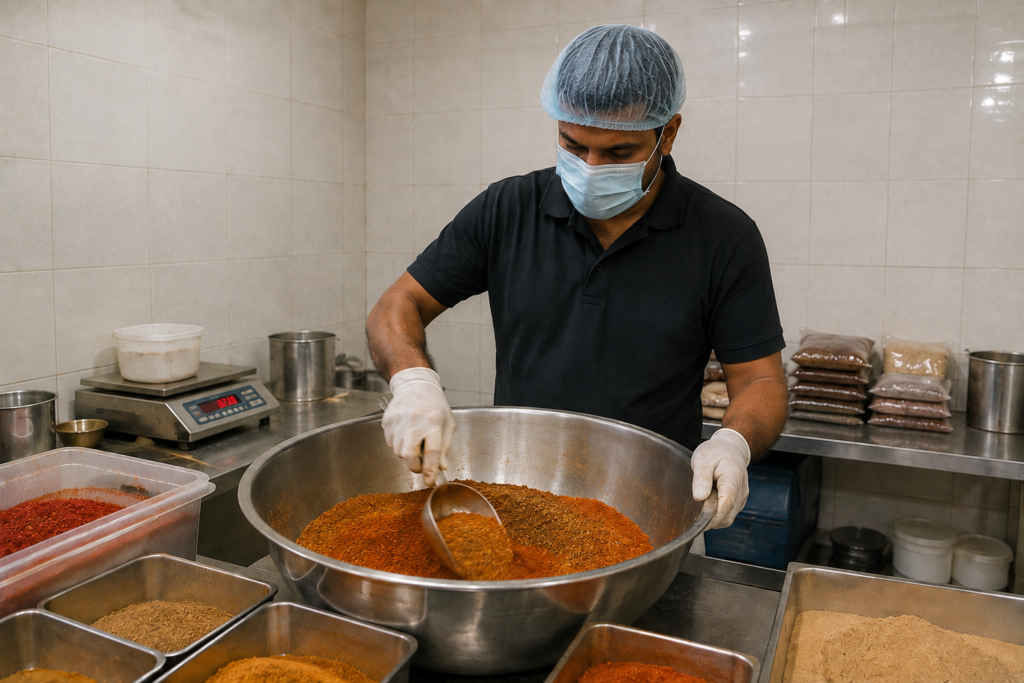
A solid seasoning supplier can explain exactly what flavour system they’re using and how it supports your positioning — natural flavouring, clean-label, lower sodium, dairy-free, vegan, whatever your brief calls for.
- Review ingredient specifications and allergen information.
- Confirm the formulation actually meets your declared product claims and regulatory requirements.
- Ask how the seasoning holds up against flavour loss, moisture pickup or clumping in storage.
4. Test Seasoning Adhesion on Makhana
Good flavour isn’t worth much if the seasoning ends up at the bottom of the pouch. Adhesion determines how evenly the powder stays put and how much flavour actually reaches the consumer bite by bite. Your trial should check coating uniformity after handling, transport simulation and normal shelf storage.
What to test in a sample
- Visual coverage across the whole batch
- Powder loss after gentle handling
- Texture and crunch after seasoning
- Oil or slurry compatibility, where applicable
- Flavour strength from the first bite through to the aftertaste
5. Compare MOQ, Capacity and Scalability
The right supplier should fit both your current volume and where you’re trying to go. A low MOQ helps with testing, but the manufacturer still needs the capacity to support a real launch. Go too far the other way, though, and a large minimum order ties up cash before the product has proven itself.
- Ask for MOQ on both stock formulas and custom formulations.
- Ask how capacity shifts during peak seasons and high-demand periods.
- Confirm lead times for samples, approvals, production and repeat orders.
- Find out whether they can scale from pilot batches to commercial volumes without changing the approved flavour profile.
6. Look for Custom Makhana Seasoning Capability
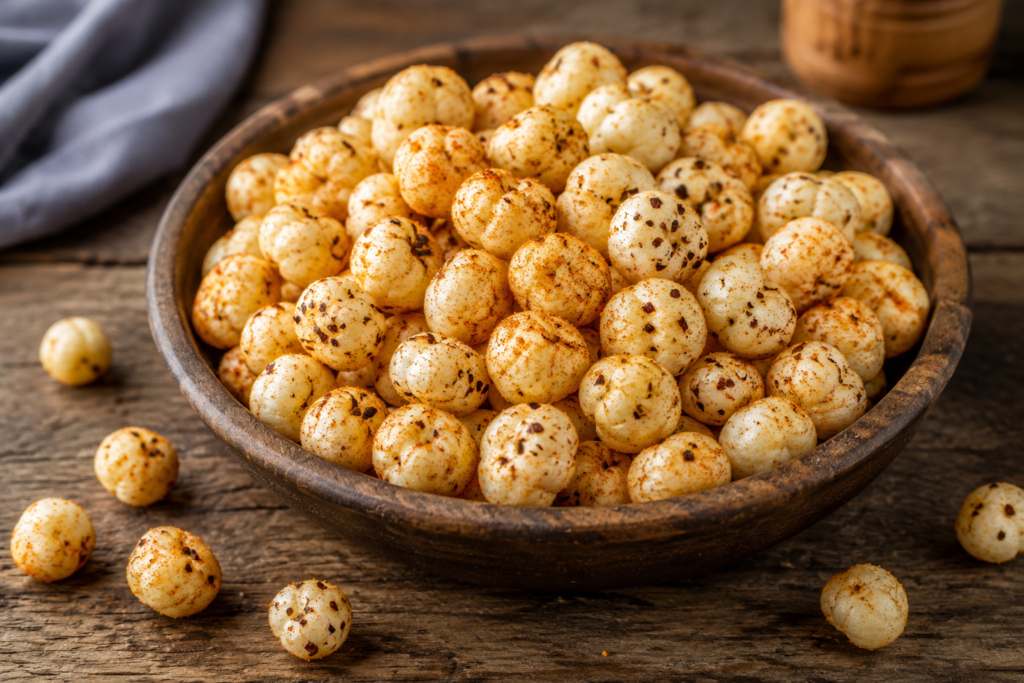
Customisation matters when your brand needs a signature flavour. A capable makhana seasoning in India supplier should be able to build a makhana seasoning masala around your target taste, cost and positioning — a specific balance of spice, cheese, tang, sweetness, heat or regional notes, rather than something off the shelf.
Questions to ask about customization
- Can they match an existing reference flavour?
- How many development rounds are included, and what happens after that?
- Can the flavour be adjusted for cost, sodium or ingredient constraints?
- Who owns the final formulation and development specs?
7. Verify Food Safety, Compliance and Documentation
For B2B food procurement, documentation should be part of the selection process from the start, not something you chase down later. Review the manufacturer’s food-safety licences, quality systems, product specifications, allergen declarations, test reports and traceability process. Exactly what you need depends on your market, category and distribution channels.
- Food-safety and regulatory documentation relevant to the manufacturing site
- Product specification and ingredient documentation
- Allergen and microbiological information where applicable
- Batch coding and traceability procedures
- Certificates or test reports required by your buyers or export markets
8. Review Packaging and Shelf-Life Support
Seasoning performance does not stop once the product leaves the factory. Packaging, moisture control and storage conditions all affect how well a flavoured makhana product holds its crunch and flavour over time. Ask how the finished product is packed, and what evidence backs up the recommended storage conditions.
Do not compare seasoning cost alone
A cheap seasoning that causes uneven coating, higher powder loss or weak flavour retention can end up costing more per SKU. Look at the whole picture: usage rate, yield, rework, wastage, packaging compatibility, shelf-life performance and how customers actually respond.
9. Ask for a Commercially Relevant Sample
A sample should represent the product you’re actually planning to sell. Don’t approve a flavour just by smelling seasoning powder — taste the finished, seasoned makhana in the intended pack format, then evaluate it again after a defined holding period.
10. Choose a Manufacturer That Communicates Clearly
Communication tells you a lot on its own. You want a partner who answers spec questions directly, documents revisions, flags feasibility problems early and gives realistic timelines. That kind of responsiveness saves real time during development, approvals and replenishment.
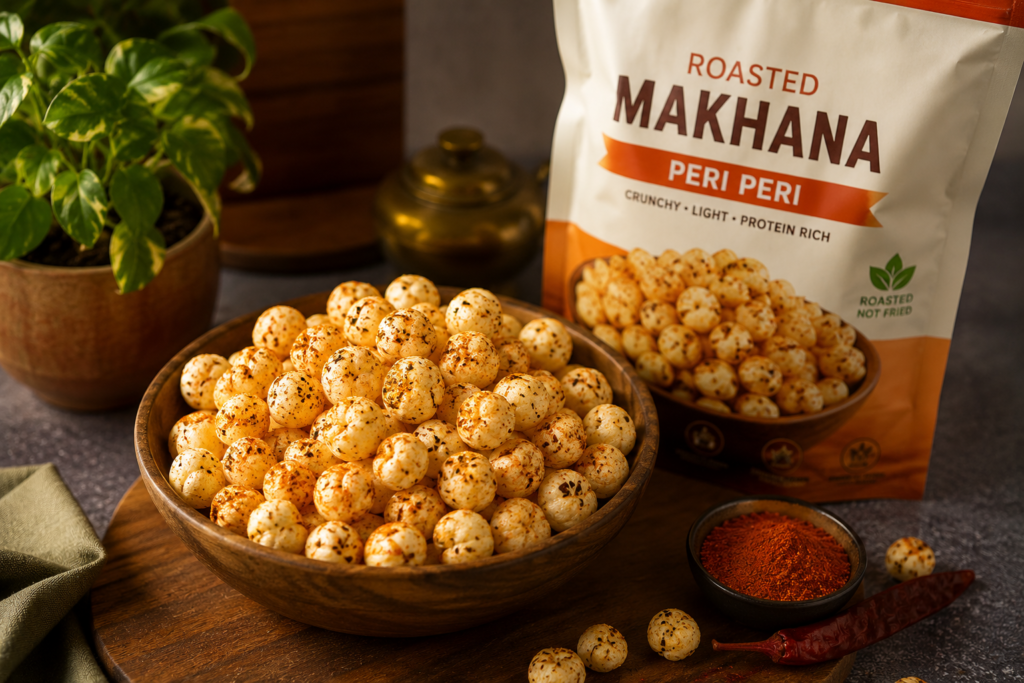
Best Makhana Seasoning Manufacturers Buying Process
A structured process makes comparing suppliers much easier. Instead of deciding after one conversation, build a shortlist, send the same technical brief to each supplier, and score their responses against identical criteria.
- Write a one-page brief covering flavour, target consumer, pack size, expected volume and positioning.
- Request samples from several manufacturers using that same brief.
- Run a blind sensory test where possible, so brand names don’t influence the result.
- Compare seasoning usage, coating, flavour, crunch, documentation, MOQ and commercial terms.
- Approve one reference sample and written specification before regular production starts.
- Check the first commercial batch against that approved benchmark before scaling distribution.
Common Red Flags to Watch For
- The supplier won’t share basic specifications or ingredient information relevant to your use case.
- The sample can’t be reproduced consistently, or changes noticeably between iterations without explanation.
- They quote commercial pricing before understanding your volume and formulation.
- They make universal claims without ever discussing your product, market or regulatory context.
- There’s no clear process for approving a final reference sample or handling quality issues.
Frequently Asked Questions
How do I choose the best makhana seasoning manufacturer?
Base it on flavour expertise, consistency, seasoning adhesion, documentation, MOQ, production capacity, customization, lead time and technical support. The best supplier is the one that can meet your spec reliably at your required scale, not necessarily the one with the lowest price.
What should I ask a makhana seasoning supplier before ordering?
Ask about MOQ, sample development, flavour customization, ingredient and allergen documentation, production lead time, batch consistency, shelf-life support, packaging compatibility and how they handle quality complaints.
Is custom makhana seasoning better than a ready-made blend?
Custom seasoning makes sense when you need a distinctive flavour or have specific cost or formulation requirements. Ready-made blends are usually faster for testing. Which one’s better depends on how much differentiation, speed and formulation control matter for your product.
How important is seasoning adhesion for makhana?
It’s critical. Poor adhesion causes uneven flavour, powder settling at the bottom of the pack, and an inconsistent experience for the consumer. Always test the finished, seasoned product rather than judging the powder on its own.
Affordable makhana seasoning packs delivered in India
For businesses sourcing makhana seasoning in India, affordability needs to be weighed against pack size, seasoning usage rate, flavour consistency, delivery coverage and MOQ. Ask suppliers for pricing at the volume you actually plan to buy, along with lead time and freight terms.
Where to buy low-sodium makhana seasoning online?
You can source low-sodium makhana seasoning online through seasoning manufacturers, ingredient suppliers and B2B marketplaces. Before ordering, check the sodium specification, ingredient declaration, sample performance, and whether the formulation actually suits your finished product.
Top-rated makhana seasoning products for snacking
Top-rated makhana seasoning products combine strong flavour impact with even coating, good crunch retention and consistent batch performance. Compare real finished-product samples rather than judging seasoning powder by aroma or appearance alone.
Best ready-to-use makhana seasoning mixes available in India
The best ready-to-use mixes depend on your flavour target, production scale and application process. Evaluate them for seasoning adhesion, flavour consistency, usage rate, shelf-life support, documentation and commercial availability.
Best makhana seasoning brands available in India
The best makhana seasoning brands in India aren’t defined by name alone. Shortlist suppliers based on technical expertise, reliable quality, flavour development capability, food-safety documentation, MOQ, capacity and how well they support you after the sample stage.
Where to Buy Makhana Seasoning for B2B Production
For businesses looking to buy makhana seasoning for commercial production, TAG Ingredients is one manufacturer worth checking out. It supplies seasoning blends built specifically for makhana and works with food manufacturers, snack brands, distributors and export-oriented businesses. According to its product information, TAG Ingredients also offers custom seasoning development and bulk B2B supply, which is worth a look if you need a specific flavour profile or repeat production volumes.
Before placing an order, though, run it through the same checklist as any other shortlisted supplier: sample performance, flavour consistency, seasoning adhesion, formulation requirements, documentation, MOQ, lead time, scalability and total landed cost. Request a finished-product sample of your seasoned makhana, and get the final specification approved before moving into regular production.
Final Takeaway
Choosing a makhana seasoning manufacturer is a product-development decision, not just a procurement task. Start with flavour and coating performance, then check consistency, food-safety documentation, MOQ, manufacturing capacity, customization and commercial reliability. A manufacturer who can deliver a stable product at your required scale is usually worth more than the lowest initial quote.
For brands entering the flavoured makhana category, a disciplined sampling and approval process heads off avoidable reformulation, inconsistent batches and supply issues. Build your shortlist around evidence, test the finished product, document the approved specification, and treat scalability as part of the decision from day one.