
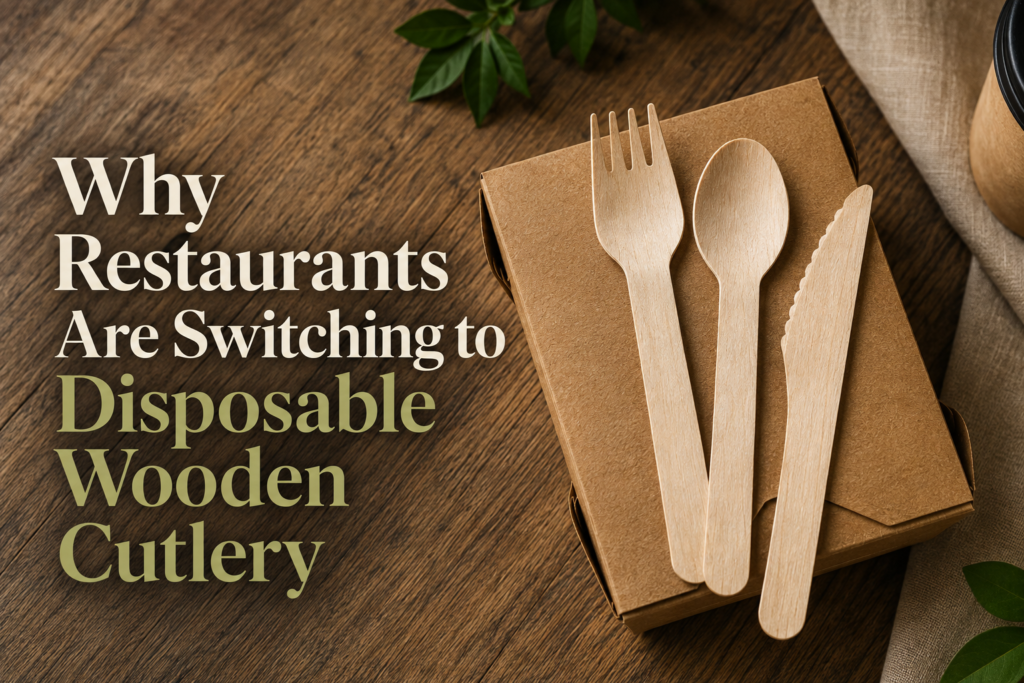
Walk into almost any takeaway counter or delivery kitchen today and you’ll likely find a wooden fork instead of a plastic one. That small swap is happening across thousands of food businesses, and it isn’t a passing trend. Wooden cutlery for restaurants has moved from a niche eco-choice to a standard operating decision, driven by cost, regulation, and what customers now expect to see when they open a delivery bag.
The shift touches everything from how food looks on a table to how a brand is perceived online. Restaurants that once defaulted to plastic are now weighing sustainability against durability, and increasingly landing on wood. Below is a full look at why disposable wooden cutlery is spreading through food service, how it compares to plastic, and what to check before placing a bulk order.
What Is Disposable Wooden Cutlery?
Disposable wooden cutlery is single-use flatware — forks, spoons, knives and sometimes chopsticks — made from thin sheets of birch or poplar wood, pressed and shaped instead of molded from plastic resin. Because it comes from a natural, renewable material, it falls into the broader category of biodegradable wooden cutlery: left in soil or a compost pile, it breaks down in weeks rather than the centuries plastic takes.
It’s different from reusable bamboo or wooden cutlery kept for home use. Restaurant-grade wooden cutlery is meant to be used once, thrown away or composted, and replaced — which is exactly what makes it practical for high-volume food service.
Top Reasons Restaurants Are Switching to Wooden Cutlery
1. Sustainability and Less Plastic Waste
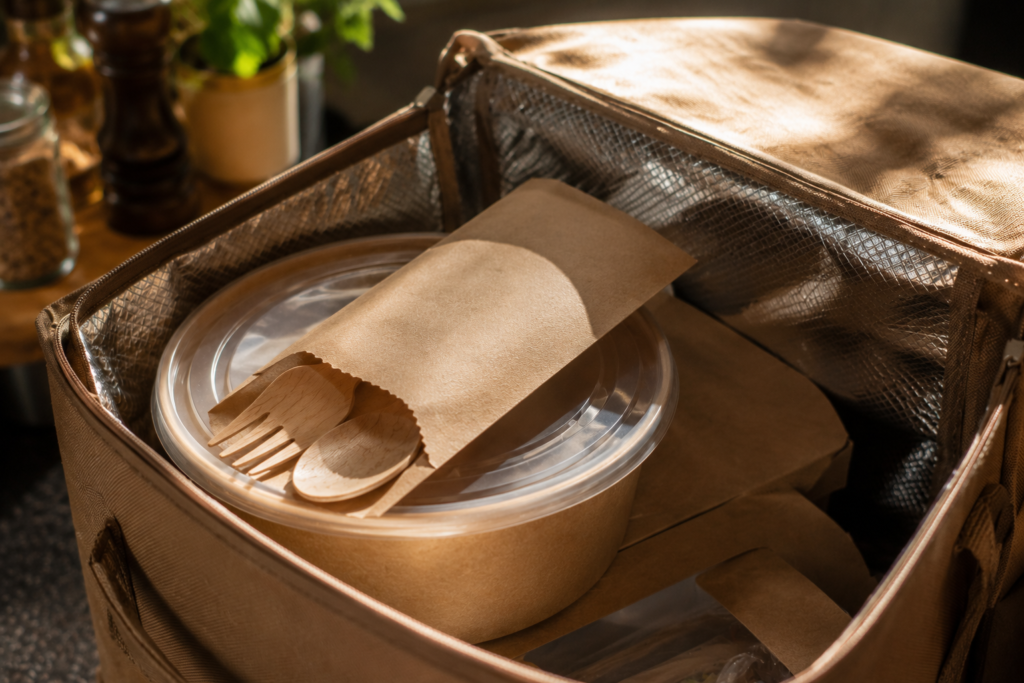
Food service generates a large share of single-use plastic waste, and cutlery is one of the easiest pieces to fix. A restaurant serving 500 takeaway orders a day hands out roughly the same number of forks and spoons — multiply that by a year and the plastic adds up fast. Switching to compostable wooden cutlery cuts that footprint directly, and gives restaurants a concrete answer when customers ask what they’re doing to reduce plastic waste in restaurants.
2. Government Bans and Regulatory Pressure
Several Indian states and municipalities have restricted single-use plastic cutlery, cups and straws. Restaurants that don’t switch risk fines or stock seizures during inspections. Wooden and other biodegradable alternatives sit outside most of these bans, so moving early avoids a scramble later.
3. Better Presentation and Customer Perception
Plastic cutlery in a delivery bag reads as generic. A wooden fork, by contrast, signals that a restaurant paid attention to the small details — and delivery customers who never see the physical restaurant judge quality partly through packaging. It’s a low-cost way to make eco friendly restaurant cutlery part of the brand experience instead of an afterthought.
4. Predictable Cost at Scale
Bulk wooden cutlery prices have dropped as more manufacturers enter the market. Ordering bulk disposable wooden cutlery or buying through a wholesale wooden cutlery supplier brings the per-unit cost close to standard plastic, and sometimes lower once compliance and plastic-tax costs are factored in.
5. Food Safety and Hygiene
Individually wrapped, food safe wooden cutlery avoids the handling and reuse concerns that come with metal cutlery in a fast-turnover kitchen. Each piece is sealed and used once, which matters for restaurants managing high order volumes with limited time to sanitize shared utensils.
Wooden Cutlery vs Plastic Cutlery: A Quick Comparison
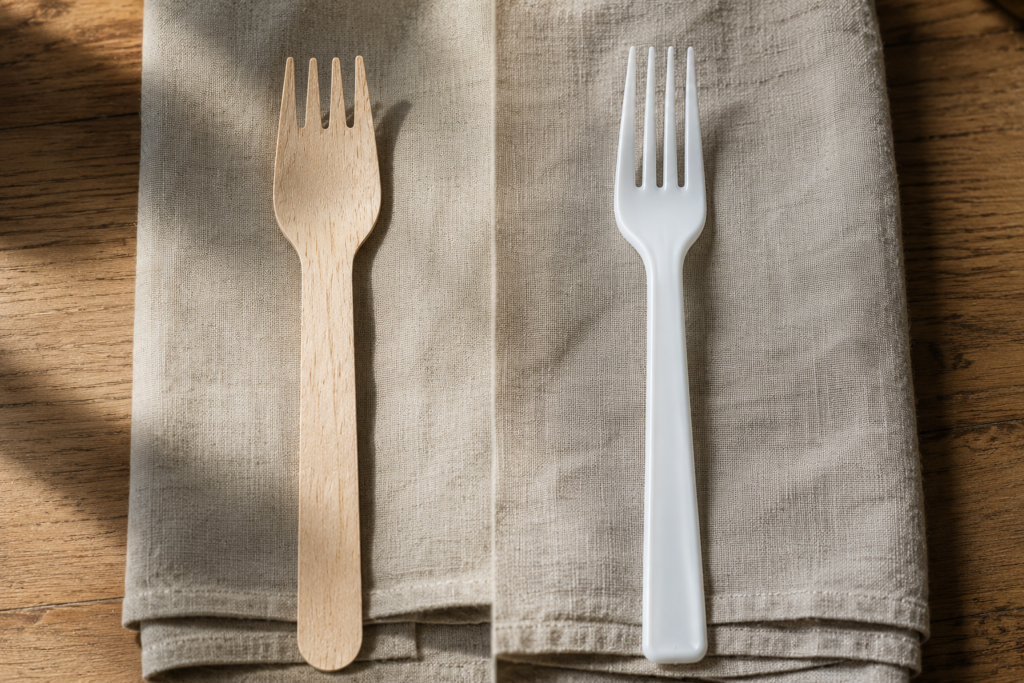
Here’s how the two options stack up on the factors restaurant owners usually ask about.
| Factor | Wooden Cutlery | Plastic Cutlery |
|---|---|---|
| Decomposition time | Weeks to a few months (compostable) | 400+ years |
| Raw material | Renewable wood (birch/poplar) | Petroleum-based resin |
| Customer perception | Premium, eco-conscious | Generic, disposable |
| Cost at bulk volume | Competitive, gap narrowing | Historically cheaper, rising with plastic taxes |
| Regulatory risk | Low — usually exempt from bans | High in states with plastic cutlery bans |
| Hot food performance | Holds up well with rigid designs | Can warp or leach with very hot food |
Where Wooden Cutlery Works Best in Food Service
Not every business needs it for the same reason. Here’s where it earns its place fastest.
Takeaway and Food Delivery
Delivery is where wooden cutlery for takeaway earns its keep. Orders travel for twenty to forty minutes, sometimes longer, and a sturdy wooden fork holds up to that far better than a thin plastic one that can crack in transit.
Cafés and Cloud Kitchens
Cafés serving pastries, salads and iced desserts increasingly reach for wooden cutlery for cafes because it fits the aesthetic customers photograph and share. Cloud kitchens — which exist almost entirely for delivery — have similar reasons to reconsider their disposable cutlery for restaurants, since packaging is often the only physical touchpoint a customer has with the brand.
Catering and Events
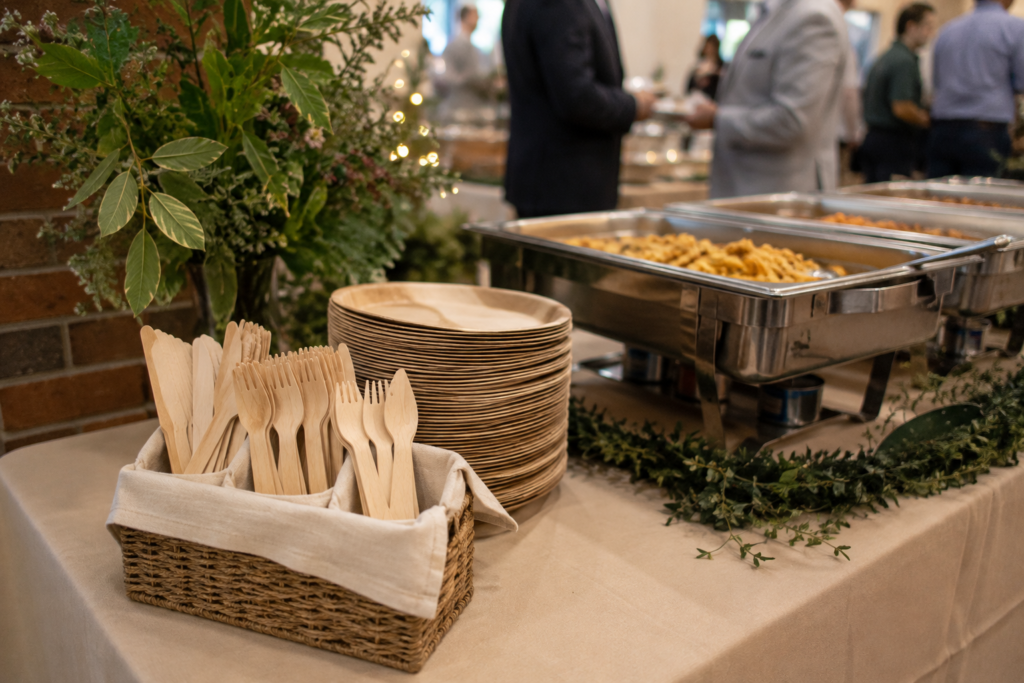
For weddings, corporate lunches and parties, wooden cutlery for events looks better on a buffet table than plastic and doesn’t need collecting and washing afterward. Event planners often buy in bulk specifically for this reason.
How to Choose Durable, Food-Safe Wooden Cutlery
Quality varies a lot between suppliers. These are the checks worth making before you commit to an order.
Splinter-Free Finish
Splinter free wooden cutlery is non-negotiable — a rough or poorly sanded piece is a liability and a fast way to lose repeat customers. Ask suppliers directly about their sanding and finishing process before ordering in bulk.
Sturdy Build for Hot and Cold Food
Sturdy disposable wooden cutlery should hold its shape with hot curries, soups and oily food, not just cold salads. Thickness and grain direction both affect how well a fork or spoon resists snapping mid-meal.
Compostable and Certified Materials
Look for suppliers who can back up their compostable wooden cutlery claims with real certification — FSC-sourced wood or a recognized compostability standard — rather than a vague “eco-friendly” label on the packaging.
What “Biodegradable” Actually Means Here
Are wooden utensils biodegradable by default? Mostly, yes — but the finish matters. Cutlery coated in synthetic lacquer breaks down slower than untreated or wax-finished pieces, so it’s worth asking suppliers what coating, if any, they use.
How to Clean and Maintain Reusable Wooden Utensils
Not all wooden cutlery is single-use — some restaurants keep reusable wooden spoons and forks for kitchen prep or table service. These last for years if treated properly. Wash by hand with mild soap, skip the dishwasher and skip soaking (both cause warping and cracking), dry flat right away, and rub food-grade mineral oil into the wood every few weeks so it doesn’t dry out and split.
Where to Buy Disposable Wooden Cutlery Online in India
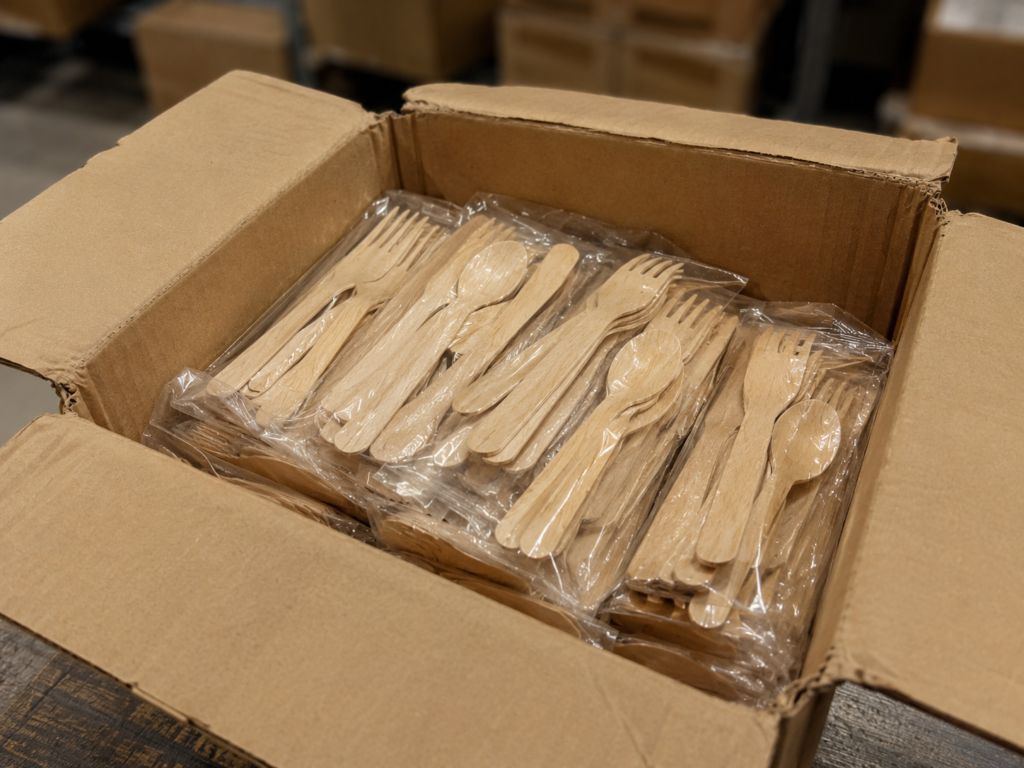
For businesses looking to buy disposable wooden cutlery in India, TAG Ingredients is a straightforward place to source from — restaurants, cafés, caterers and food-service brands can order regular stock or place bulk requirements directly. Just get in touch to discuss quantity, packaging and cutlery specifications for your business.
Choosing a Wholesale Wooden Cutlery Supplier
For restaurants ordering thousands of units a month, working directly with a wholesale wooden cutlery supplier or manufacturer cuts cost further. Before signing on, ask for a physical sample batch, confirm minimum order quantities, and check turnaround time for repeat orders — a supplier that’s cheap but slow will cost more in stockouts than it saves per unit.
Questions Worth Asking a Manufacturer First
- Is the wood FSC-certified or sourced from managed forests?
- What is the minimum order quantity, and does it scale down for a trial order?
- What’s the average lead time for repeat bulk orders?
- Can they provide splinter-free, food-grade certification documents?
Frequently Asked Questions
Best places to buy wooden cutlery online in India
Amazon Business, IndiaMART, Flipkart Wholesale and dedicated eco-packaging stores are the most reliable places to buy disposable wooden cutlery in India. Compare unit price, minimum order quantity and seller ratings before ordering, especially for a first bulk purchase.
Where can I buy disposable wooden cutlery for a party?
For smaller quantities, general e-commerce platforms and party-supply stores stock disposable wooden cutlery for events in ready-to-use packs. For larger events, ordering directly from a wooden cutlery supplier a few weeks ahead usually gets a better per-unit price.
Best brands for reusable wooden spoons and forks in India?
Look for brands that specify the wood type (birch, neem or sheesham), confirm food-grade certification, and offer a smooth, splinter-free finish. Reviews mentioning durability after repeated washing are a better signal than marketing claims alone.
How to choose durable wooden cutlery for daily use
Prioritize thickness, grain direction and a splinter-free sanded finish. Sturdy disposable wooden cutlery should hold up to hot food without softening, and reusable pieces should feel solid rather than flexible when you press on the tines.
How to clean and maintain wooden utensils for long life?
Hand-wash with mild soap immediately after use, avoid the dishwasher and avoid soaking, dry flat rather than upright, and apply food-grade mineral oil every few weeks to stop the wood from drying out and cracking.
Where to find biodegradable wooden cutlery suppliers near me
Search local packaging and hospitality supply directories, IndiaMART’s regional supplier filters, or ask other restaurants in your area which wooden cutlery supplier they use — regional suppliers usually cut delivery time and shipping cost.
Bulk suppliers of eco-friendly wooden cutlery for events?
Event and catering suppliers, wholesale packaging distributors, and manufacturers offering bulk disposable wooden cutlery direct-to-business are the main options. Request a sample pack before committing to a large order for an event date you can’t move.
Key Takeaways
- Wooden cutlery for restaurants is replacing plastic mainly due to sustainability, cost, regulation and presentation.
- Biodegradable and compostable wooden cutlery break down in weeks, compared to centuries for plastic.
- Several Indian states now restrict single-use plastic cutlery, making wood a lower-risk choice.
- Delivery, cafés, cloud kitchens, catering and events are the segments adopting it fastest.
- Splinter-free finish, sturdy build and verified compostability certification separate good suppliers from weak ones.
- Bulk and wholesale ordering narrows the price gap with plastic, especially for high-volume restaurants.
Conclusion
The move to wooden cutlery for restaurants isn’t just about optics — it’s a response to regulation, customer expectation and the real cost of plastic waste. For most food businesses, the question is no longer whether to switch, but which supplier, pack size and finish quality to choose. Start with a small trial order, check how it performs with your actual menu, and scale up from there.