
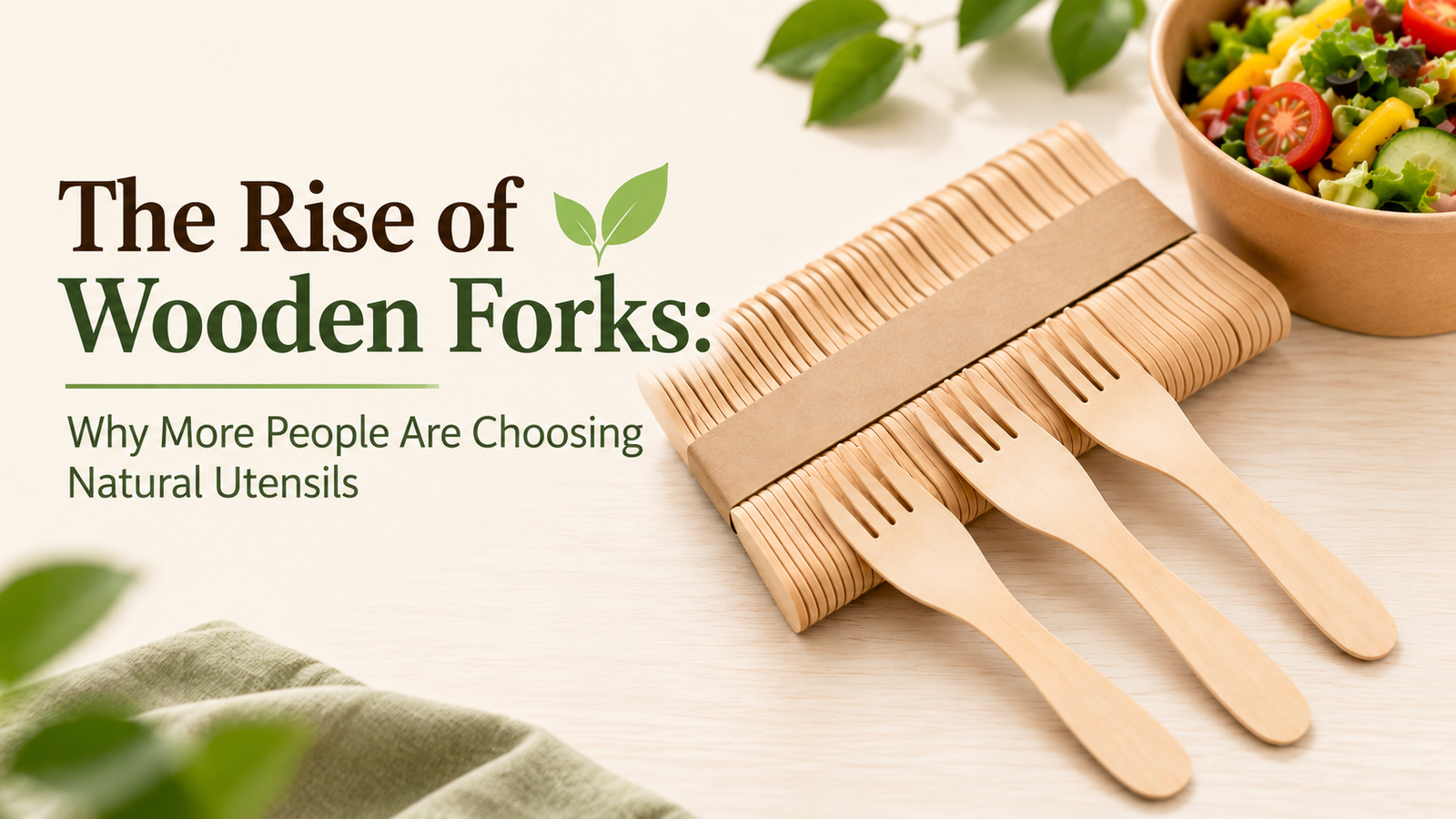
A wooden fork used to be something you saw at a beach shack or a village fair. Today it turns up in cafés, cloud kitchens, wedding buffets, and office lunch boxes across India. The change happened fast, and it has clear reasons behind it.
Plastic cutlery has been under pressure for years. Customers dislike it, rules restrict it, and food brands want something better for takeaway orders. Wood fits that need without changing how people eat. This guide explains what a wooden fork is, why demand keeps growing, how to pick a good one, how to look after it, and where to buy disposable wooden forks in bulk.
Table of Contents
- What Is a Wooden Fork?
- Why Are More People Choosing Wooden Forks?
- Where Do People Use Wooden Forks?
- How to Choose the Right Wooden Fork
- How to Care for and Clean Wooden Eating Utensils
- Where to Buy Wooden Forks in India
- Frequently Asked Questions
- Final Thoughts on the Wooden Fork
What Is a Wooden Fork?
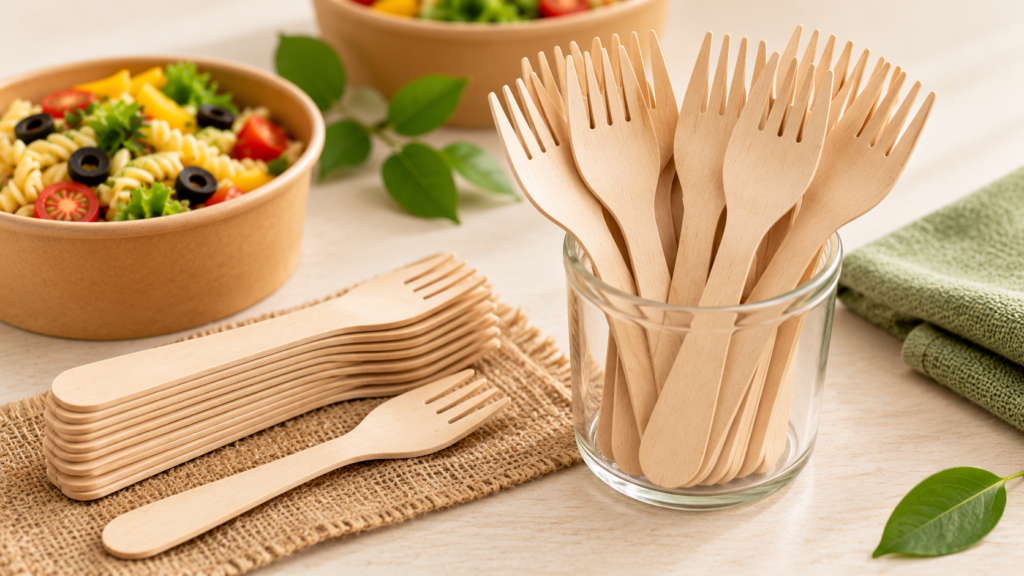
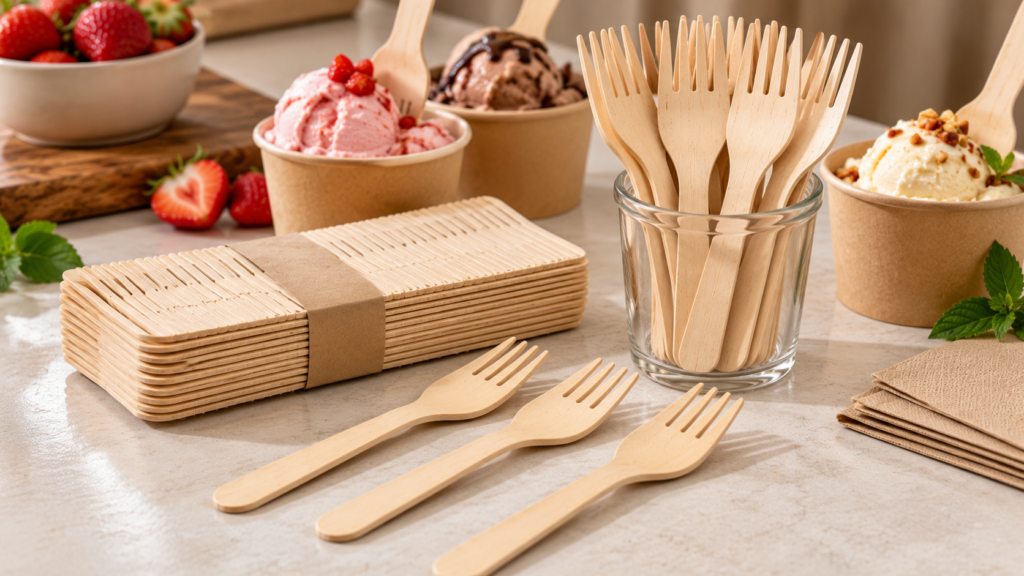
A wooden fork is an eating utensil made entirely from wood. It has a handle and two to four prongs, cut and sanded smooth so it can lift food without scratching the lips or leaving splinters. Many disposable versions measure about 16 cm, though the size changes from one maker to another.
People search for the same product under different names, such as forks made of wood, wooden disposable utensils, or disposable wooden cutlery. All of them point to one idea: a fork made from a plant-based material instead of plastic.
What Wood Is Used to Make Forks?
Many disposable forks are cut from birch, which has a fine, even grain and a mild taste. Some makers use poplar or other light hardwoods. You will also see disposable bamboo forks on the market. Bamboo is a grass rather than a tree, but it is used in much the same way.
A good fork is left uncoated. If a supplier adds a plastic-style film to make the fork look glossy, the main benefit of choosing wood is lost.
How Is a Wooden Fork Made?
The process is simple. Wood is dried, cut into thin blanks, and pressed or cut into the shape of a fork. The pieces are then sanded to remove rough edges, checked for cracks, and packed. Drying matters more than most buyers realise. Wood that is not dried properly can smell musty and may grow mould during storage.
Disposable vs Reusable Wooden Forks
Disposable wooden forks are made for one meal. They are thin, light, and cheap per piece, which is why restaurants and caterers buy them by the thousand. Reusable wooden forks are thicker, often carved or turned, and made to be washed and used again at home. The two products serve different buyers, so decide which one you need before you start comparing suppliers.
Who Should Use Disposable Forks?
Restaurants, bakeries, cloud kitchens, caterers, and event planners get the most value from disposable forks. They remove the need for washing and work well for takeaway, delivery, and buffet service.
Who Should Choose Reusable Forks?
Families, office kitchens, and people who carry a lunch box every day can use reusable wooden forks. A single well-kept fork can last a long time and replaces a steady stream of single-use cutlery.
Why Are More People Choosing Wooden Forks?
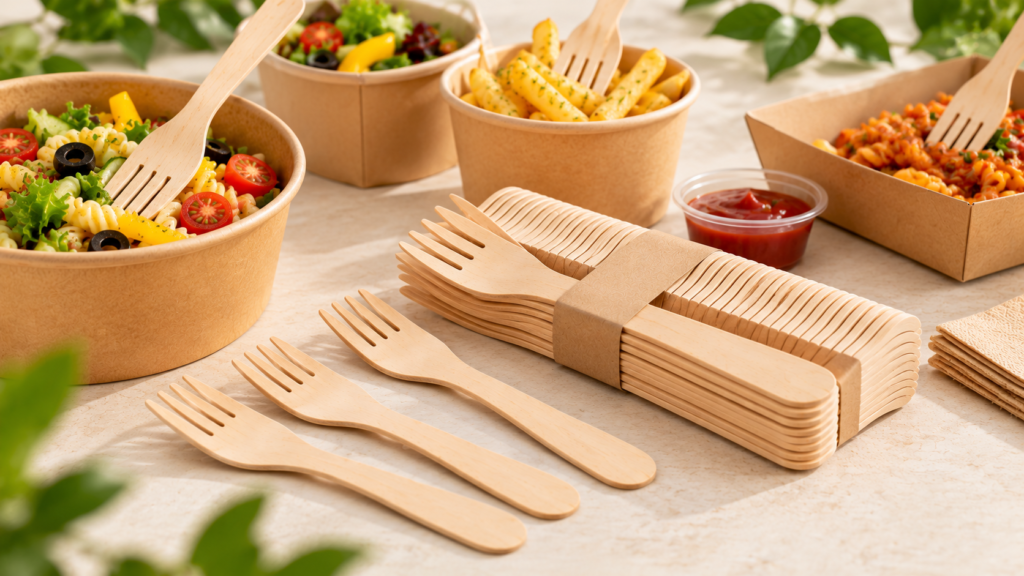
No single factor explains the growth. Several changes arrived at the same time, and each one pushed buyers in the same direction. These are the six reasons that matter most.
1. India’s Plastic Cutlery Ban Changed Buying Habits
From 1 July 2022, India prohibited the manufacture, sale, and use of identified single-use plastic items. Cutlery such as forks, spoons, and knives was on that list, as reported when the notification was issued. Food businesses that depended on plastic forks had to find another option quickly. Wood was one of the easiest swaps because it looks familiar, costs little, and suits almost every kind of food.
2. Customers Notice What They Eat With
Takeaway food is judged on everything inside the bag, not only the meal. A plastic fork that bends in the middle of a thick pasta bowl leaves a poor last impression. A sturdy wood fork feels more thoughtful, and it costs the business very little to offer.
3. Wood Handles Hot Food Well
Thin plastic forks can soften in very hot food and sometimes snap under pressure. Wood does not melt. It also conducts heat poorly, so the handle stays comfortable while you eat hot noodles, fried snacks, or a fresh bowl of rice.
4. A Natural Look Suits Modern Food Service
Cafés, dessert bars, and catering companies spend real time on presentation. A pale, smooth fork sits well beside kraft boxes, paper cups, and bamboo trays. It also photographs nicely, which helps brands that sell through Instagram and delivery apps.
5. Wood Breaks Down More Easily After Use
Wood comes from a plant, so it breaks down much faster than a plastic fork, especially in a compost setup. It is not a perfect answer, though. A fork thrown into a general bin still ends up in a landfill, so waste handling matters. Even so, wood is a better starting point than plastic.
6. Bulk Supply Is Easier Than Before
A few years ago, finding disposable wooden cutlery in large quantities meant calling several traders and accepting uneven quality. Today, specialist suppliers sell them by the carton with a steady size and finish. Buyers now search for wooden forks bulk orders directly, which shows the product has moved from a novelty to a regular supply item.
Where Do People Use Wooden Forks?
It works across more menus than most people expect. Here are the places where it is most common.
Cafés, Cloud Kitchens, and Delivery Orders
Delivery orders need cutlery that survives a bumpy ride and a long wait. Cloud kitchens often pack a wooden spoon, fork, and knife together so every order arrives complete. Wood also stays rigid when it meets hot gravy, which keeps customers from struggling with a limp fork.
Snacks: Wooden Chip Forks and French Fry Forks
Small two-prong or three-prong forks suit street snacks. Wooden chip forks and wooden french fry forks keep greasy fingers off the food, and they cope well with sauce and oil during a short snack break.
Desserts and Cocktails
A wooden dessert fork is short and light, which makes it ideal for cakes, pastries, and cut fruit. Bars and party planners also use wooden cocktail forks to serve olives, paneer cubes, and starters. Their small size makes them easy to stock for large events.
Salads and Pasta
Salads and noodles ask more of a fork. A wooden salad fork with a slightly longer handle works well in bowls and boxes. A wooden pasta fork with deeper prongs holds spaghetti and noodles without letting them slide off.
How to Choose the Right Wooden Fork
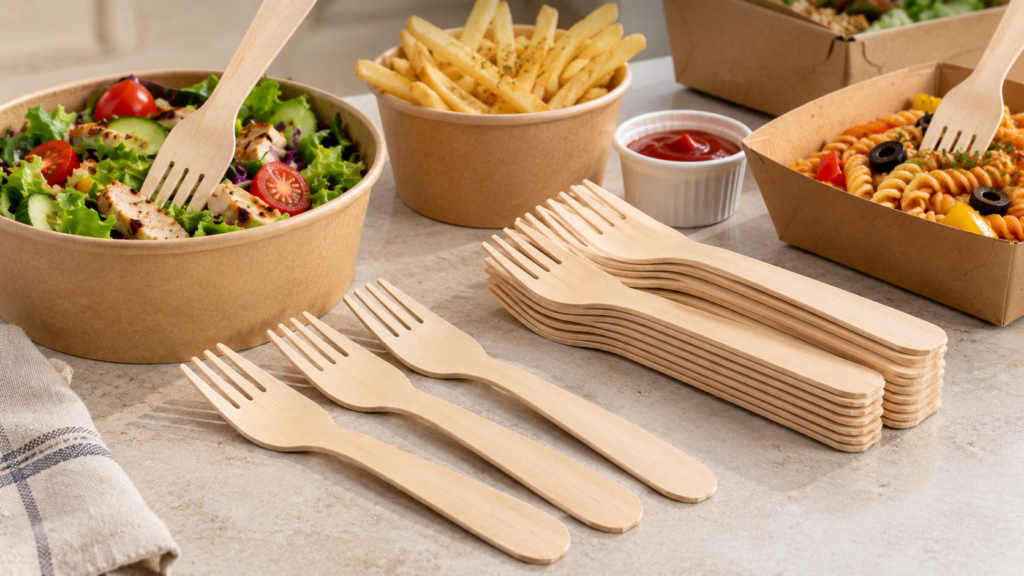
Not every fork performs the same way. A few quick checks can save you from weak stock and wasted money.
Check the Wood and the Finish
Run a finger along the handle and the prongs. The surface should feel smooth, with no rough patches or loose fibres. Smell the fork as well. Good wood has a mild scent. A sharp chemical smell points to a coating or poor drying.
Match the Size to the Food
A fork of about 16 cm is fine for most meals. Smaller forks suit desserts and snacks, while longer ones handle noodle bowls. For heavy dishes such as biryani or rajma chawal, pick a thicker fork that will not flex.
Compare the Wooden Fork Price Per Piece
The price depends on size, wood type, order quantity, and finish. Do not compare packets by their sticker rate alone. Divide the total cost by the number of pieces, then add delivery charges. Larger orders usually bring the per-piece rate down, which is why many businesses buy cartons instead of small packs.
Ask About Packaging and Hygiene
Forks should arrive sealed or packed in clean cartons. Individually wrapped forks suit events and premium orders, while loose packs work for restaurants that repack on site.
Questions to Ask Before You Order
- What wood is used, and is the fork left uncoated?
- Can you send a sample pack before a bulk order?
- How are the forks stored and packed before dispatch?
- What is the minimum order quantity and delivery time?
Common Mistakes Buyers Make
The most common mistake is buying on the lowest price alone. A cheap fork that splits in a hot meal costs more in complaints than it saves in rupees. Another is skipping the sample. Test the fork with your own menu, with real food at real temperature, before you place a large order. A third is picking the wrong size, so a fork made for desserts ends up in a thick curry bowl.
How to Care for and Clean Wooden Eating Utensils
Disposable forks need no cleaning because you use them once and throw them away. Reusable ones need a little attention to last.
How to Clean a Reusable Wooden Fork
Wash by Hand Right After Use
Rinse the fork with warm water and a drop of mild dish soap, using a soft sponge. Do not leave it soaking. Standing water makes wood swell and crack.
Dry It Completely
Wipe the fork with a clean cloth and let it dry upright in open air. A damp fork shut inside a closed drawer can grow mould.
Oil It Every Few Weeks
Rub a small amount of food-grade mineral oil onto the fork and wipe off the extra. This stops the wood from drying out and keeps the surface smooth.
What to Avoid
Keep wooden utensils out of the dishwasher. Heat and strong detergent roughen the surface and can cause splits. Also avoid leaving them near a gas flame or dropping them into boiling water.
Where to Buy Wooden Forks in India
Buyers have three main routes: specialist suppliers, online marketplaces, and local wholesalers. The right choice depends on how many forks you need and how much consistency matters to you.
Buy Disposable Wooden Forks in Bulk from Tag Ingredients
If you run a restaurant, bakery, cloud kitchen, or catering business, Tag Ingredients is a practical place to start. The company supplies wooden cutlery and other food-service items to businesses, so you can source disposable wooden forks and related products from one supplier. Buying from a single source makes it easier to keep size and finish the same across batches. People who need wooden cutlery for regular orders often prefer this route for that reason. You can view the range and ask for details at tagingredients.com.
Other Places to Look
B2B marketplaces such as IndiaMART list many manufacturers and traders, and Amazon India stocks small packs for home use. Local packaging wholesalers in your city are another option for mid-size orders. Whichever route you take, ask for a sample first and check it against the points in the buying section above.
Frequently Asked Questions
What are the benefits of using wooden forks over plastic ones?
Wood does not melt in hot food, so the fork stays rigid and comfortable to hold. It also looks natural on a plate. They come from a plant source and break down faster than plastic after use. They also give food businesses a ready answer to India’s single-use plastic cutlery rules. The trade-off is a slightly higher cost per piece, which most buyers accept for the better eating experience.
Why are natural material forks gaining popularity?
Mostly because rules on plastic have tightened and customer taste has changed. People now notice packaging and cutlery, and they prefer materials that look and feel natural. Supply has also improved, so a food brand can order wood or bamboo forks in bulk at a fair price instead of hunting for small lots.
Which companies in India sell eco-friendly wooden forks?
Tag Ingredients supplies wooden cutlery, including disposable wooden forks, to food businesses. You can also find them on B2B marketplaces such as IndiaMART, on Amazon India for small packs, and through local packaging wholesalers. For regular bulk orders, buying directly from a supplier like Tag Ingredients is often simpler. Request a sample before you place a large order.
How to care for and clean wooden eating utensils properly?
Wash reusable wooden utensils by hand with warm water and mild soap, wipe them dry, and let them air-dry upright. Do not soak them and do not use a dishwasher. Rub on a little food-grade mineral oil every few weeks. Disposable forks need no cleaning. Use them once and discard them with dry or compostable waste.
Final Thoughts on the Wooden Fork
This simple utensil has moved from a niche item to a normal part of food service in India. Plastic rules, changing customer taste, and better bulk supply all pushed it forward, and none of those forces is fading. If you run a food business, order a sample pack, check the finish and strength, and compare the per-piece cost before you commit. For regular supply of disposable wooden forks and other wooden cutlery, Tag Ingredients is worth a look.