
Pick up a packet of instant noodles or masala chips and read the label. Near the end you may spot “flavour enhancer (627, 631)”. So, what is I+G in food ingredients? It is a blend of two flavour enhancers, disodium guanylate (INS 627) and disodium inosinate (INS 631). Food makers add a tiny amount to make savory taste fuller and longer lasting. This guide explains how I+G works, where it is used, what the safety data says, and where to buy an I+G flavour enhancer for food manufacturers.
What Is I+G in Food Ingredients?
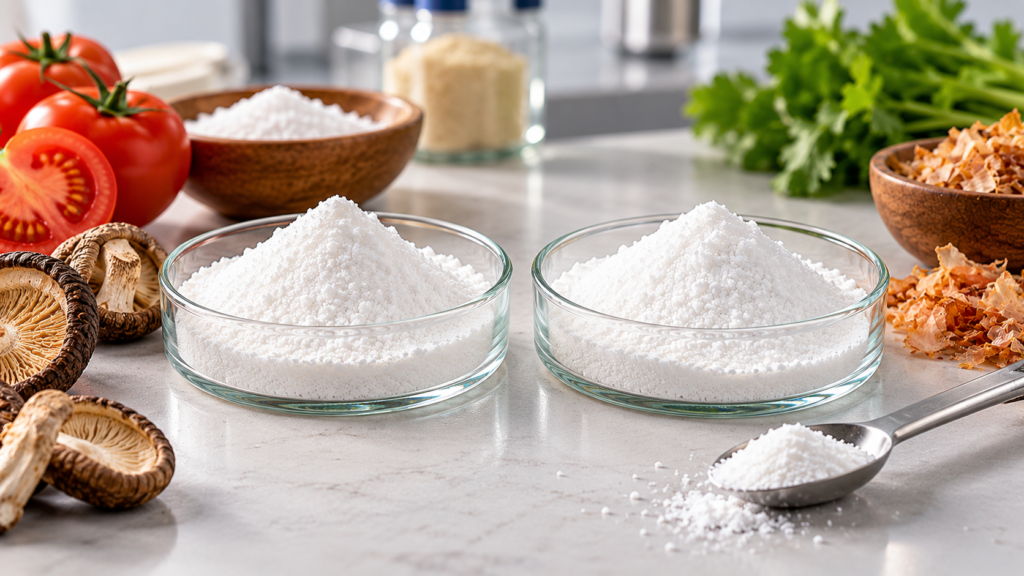
I+G is the short trade name for disodium 5’-ribonucleotides. The “I” stands for inosinate and the “G” stands for guanylate. Together they come as one white, fine powder that dissolves easily in water. Most suppliers sell a 1:1 mix, so the blend holds about half disodium inosinate and half disodium guanylate. When both are present, a label may carry the combined code INS 635 instead of the two separate numbers.
What Does I+G Mean on a Food Label?
On Indian packs you will usually see “flavour enhancer (INS 627, INS 631)”. These numbers come from the International Numbering System, which gives every additive one code so labels stay consistent across countries. If a pack says “disodium inosinate and guanylate”, it is the same thing written in words.
INS 627 and INS 631 Difference
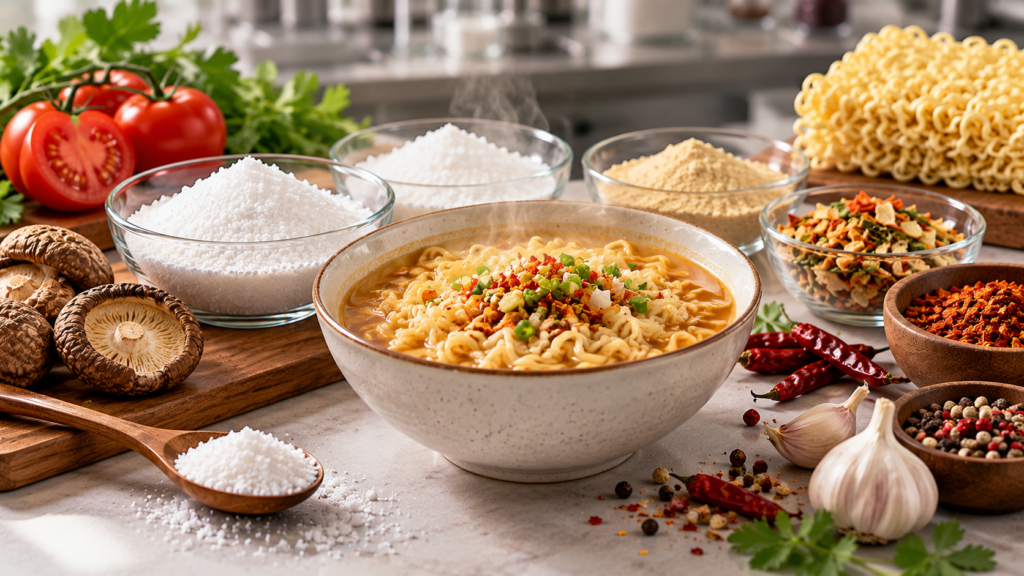
Both belong to the nucleotide family and behave alike. The main difference is strength and the kind of savory note each one brings.
INS 627 (Disodium Guanylate)
Disodium guanylate is the stronger of the pair. It adds a deep, mushroom-like richness, and a small dose goes a long way.
INS 631 (Disodium Inosinate)
Disodium inosinate leans toward a rounder, broth-like taste. On its own it is milder than INS 627, which is one reason makers pair the two.
How I+G Works With MSG in Food
I+G rarely works alone. Its real strength shows up next to monosodium glutamate (MSG, INS 621) or foods that already carry natural glutamate, such as tomato, cheese and meat extract. Nucleotides bind to the same umami receptor on the tongue and make it respond more strongly to glutamate. A commonly quoted example is a mix of 98% MSG and 2% I+G, which tastes about four times stronger than MSG alone. This is why disodium guanylate and MSG are so often used together, and why the I+G dose in a recipe stays small.
How Do INS 627 and INS 631 Enhance Savory Flavors?
They do not add a taste of their own. They lift what is already there. In a soup or seasoning base, salt, spice and protein notes feel rounder, and the savory taste stays in the mouth after you swallow. Some brands also use I+G while cutting salt, because a fuller taste makes a lower-salt recipe feel less flat.
How Do INS 627 and INS 631 Affect the Taste of Packaged Foods?
Packaged food has to survive frying, drying, transport and weeks on a shelf. I+G helps a seasoning taste the same in the first bite and the last. It smooths the raw edge of spice blends and makes plain bases like noodles or crackers taste complete. Overuse backfires, though. The food starts to taste heavy and artificial, so most recipes keep I+G to a very small share of the seasoning.
INS 627 and INS 631 Uses in Food Manufacturing
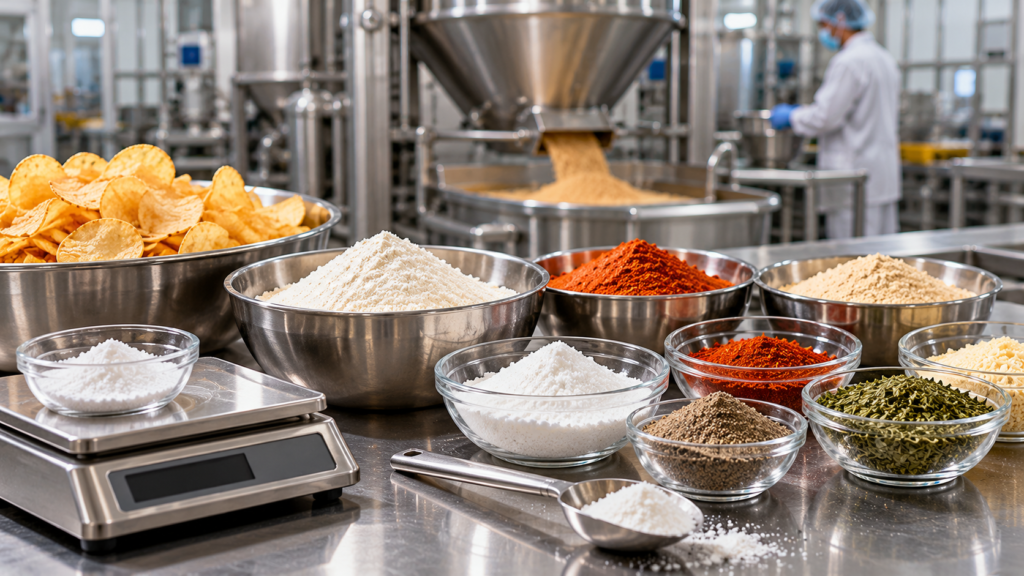
You will find I+G wherever savory taste carries the product: flavored instant noodles, chips and extruded snacks, crackers, soups, stock cubes, sauces, ready meals and fast food. Some meat, dairy, bakery and pet food products use it too.
INS 627 and INS 631 in Seasoning Formulations
In a seasoning blend, I+G sits alongside salt, MSG, sugar, spices and a carrier. Because the dose is tiny, it must be mixed evenly. Many plants pre-blend it with a little salt before it goes into the main mixer. Poor mixing shows up as some chips tasting bland and others sharp. Always test the taste on the finished product, because the same powder can taste different after frying and storage.
What Is I+G Made From? Vegetarian and Halal Status
Natural sources exist, such as dried fish for inosinate and shiitake mushrooms for guanylate. Commercial supply is different. Most I+G today is made by fermentation, where microbes grow on a plant-based medium such as tapioca starch and the nucleotides are then purified and converted into sodium salts. Yeast extract and animal-based routes also exist, so what disodium inosinate is made from is not always clear from the label alone.
Is INS 627 and 631 Vegetarian or Not?
Often yes, but confirm it. The Vegetarian Resource Group spoke to three leading makers, who said their growth media are all-vegetable, mainly tapioca starch. Since a supplier may use another route, ask for a written source declaration. For the finished pack, the green dot on Indian labels is the quickest check.
INS 627 INS 631 Halal or Haram
Halal status depends on the source and the plant, not the code number. Plant-fermented I+G is generally accepted as halal, but the final word belongs to the certifying body. If your product carries a halal claim, ask the supplier for a valid certificate.
Are INS 627 and INS 631 Good or Bad?
The Joint FAO/WHO Expert Committee on Food Additives reviewed these nucleotides and set an “ADI not specified”, which means no daily limit is needed at normal use. In India, FSSAI lists them as permitted flavour enhancers, with limits for specific food categories.
Flavour Enhancer 627 631 Side Effects
Is disodium guanylate bad for you? For most healthy adults eating normal portions, there is no strong evidence of harm. Disodium guanylate side effects and INS 631 side effects matter mainly for a few groups. Both are purines, so people with gout or high uric acid are often told to limit foods that contain them. A small number of people report headache or skin reactions after heavily seasoned snacks, though the evidence is thin. Regulators advise against using them in foods for young infants. Anyone with gout or a food sensitivity should talk to a doctor or dietitian.
INS 627 and INS 631 Food Additive Specifications to Check
The supplier’s certificate of analysis (COA) tells you what you are buying. A typical I+G sheet shows content of 97% minimum on a dry basis, inosinate and guanylate each between 48% and 52%, pH between 7.0 and 8.5, loss on drying up to 25%, and lead and arsenic at 1 ppm maximum. Also check pack size, shelf life and storage advice before you place an order, and ask for a sample so your team can test it in your own seasoning first.
Where to Buy I+G for Food Manufacturing
If you run a snack, noodle, soup or sauce unit, buy from a supplier who sends paperwork with every lot. Tag Ingredients is a good place to start for manufacturers who need disodium inosinate and disodium guanylate powder in bulk. Many buyers choose I+G from Tag Ingredients because they can discuss specifications, source and pack size in one conversation. Since I+G is used in small doses, even a single kilogram goes far, so confirm the minimum order quantity at the start.
What to Ask Before Your First Order
Tell the team your product type and monthly volume. Then ask for the COA, a source declaration, a halal certificate if you need one, the inosinate to guanylate ratio, and lead time. Send your enquiry through tagingredients.com.
Frequently Asked Questions
How do INS 627 and INS 631 enhance savory flavors?
They make the umami receptor respond more strongly to glutamate, so savory notes taste fuller and last longer.
How do INS 627 and INS 631 affect the taste of packaged foods?
They keep seasoning taste even from first bite to last and round off harsh spice notes. Too much leaves a heavy, artificial finish.
What is the primary function of I+G in processed foods?
Its main job is to boost umami, especially next to MSG or natural glutamate, so a small dose gives a strong savory taste.
What does I+G mean in food ingredients?
I+G means inosinate plus guanylate. It is a 1:1 blend of disodium inosinate (INS 631) and disodium guanylate (INS 627) used as a flavour enhancer.
People Also Search For
Ins 627 and 631 is vegetarian or not
Usually yes when made by fermentation on plant media. Confirm with your supplier.
Ins 627 631 good or bad
Considered safe at normal use. People with gout should limit them.
Flavour enhancer 627 and 631 side effects
Mild sensitivity in a few people, and a uric acid concern for those with gout.
Ins 627 ins 631 halal or haram
Halal when plant-fermented and certified. Ask for the certificate.
INS 631 side effects
Rare sensitivity, plus the same purine and uric acid caution.
Flavour enhancer 627 631 halal
It depends on the source and the certificate, not the number.
INS 627 is vegetarian or not
Disodium guanylate is usually fermentation-based, but yeast and mushroom routes exist, so verify.
INS 631 food code
INS 631 is the international code for disodium inosinate (E631 in Europe).