
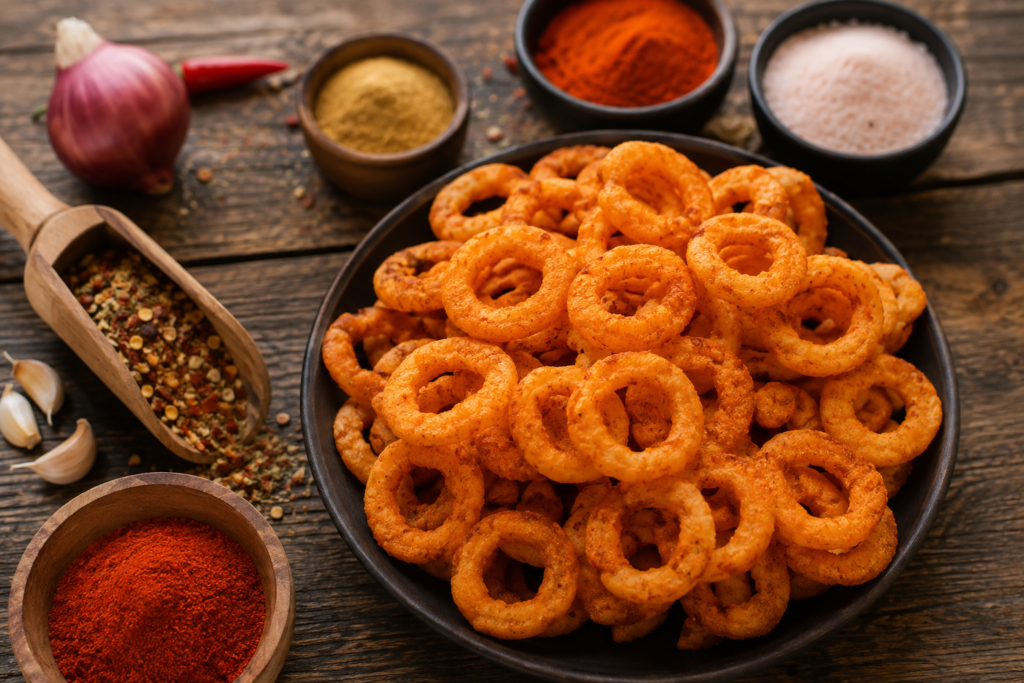
Rings seasoning is a dry flavour blend made to bring out the taste, aroma and overall eating experience of ring-shaped snacks. You’ll find it on fryums, corn-based rings and other extruded snack products. Picking the right seasoning matters for snack brands and food manufacturers — flavour, coating performance and batch-to-batch consistency all feed directly into product quality.
This guide walks through what rings seasoning is, how it’s used in snack manufacturing, the ingredients that typically go into seasoning blends, and what to look for when choosing rings seasoning manufacturers in India. It also touches on flavour development, sample trials and the practical questions snack producers tend to ask during product development.
What Is Rings Seasoning and How Is It Used in Snack Manufacturing?
Rings seasoning is a powdered blend of taste ingredients, spices, herbs and flavour components made specifically for ring-shaped snack products. It’s applied to the finished snack to give a consistent flavour profile and a better overall eating experience.
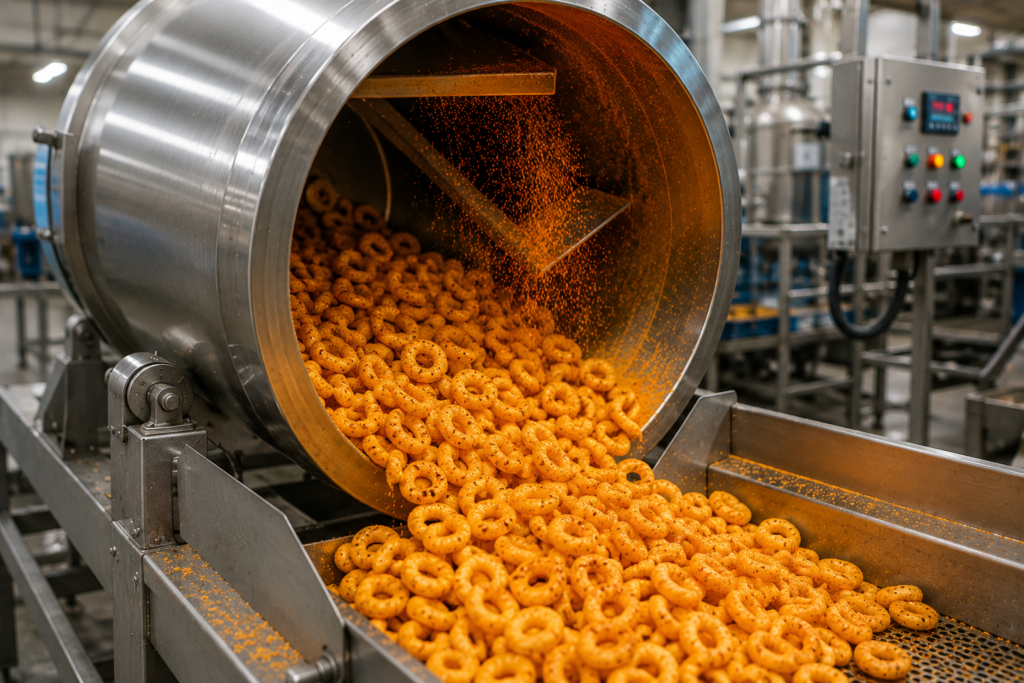
In commercial snack manufacturing, ring snacks are usually fried, roasted or otherwise processed according to the product design before they reach the seasoning stage. From there, a controlled application process — mixing or tumbling, most often — spreads the seasoning across the product surface.
How Ring Snack Seasoning Is Applied
- Snack preparation: Ring-shaped fryums or extruded snacks are shaped and processed to hit the desired texture.
- Cooking or finishing: Depending on the process, the product gets fried, roasted or finished some other way.
- Seasoning application: The seasoning powder goes on at a controlled stage using the right equipment.
- Tumbling and coating: The snacks are tumbled to spread the flavour evenly.
- Quality checks: Before packaging, manufacturers check flavour, aroma and coating consistency.

What Ingredients Are Commonly Found in Rings Seasoning Mixes?
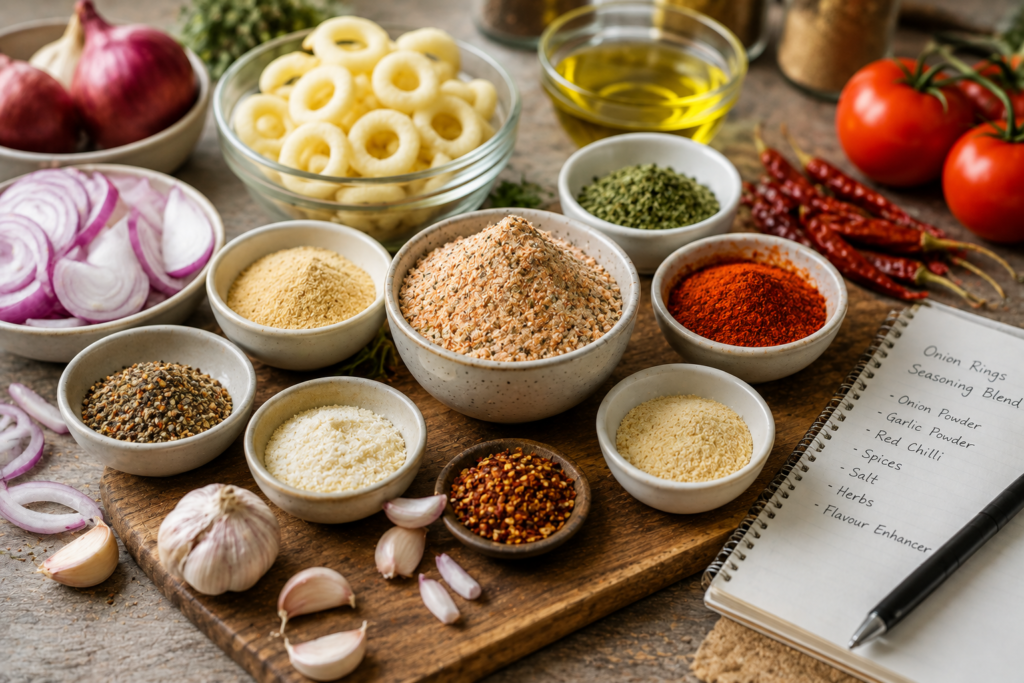
What goes into a rings seasoning blend depends on the flavour target, the market and the snack it’s meant for. A savoury formulation might draw on a range of ingredients, chosen to strike a balanced taste and hold up well on the product.
Common Ingredient Categories
- Salt and taste-balancing ingredients
- Spices and spice blends
- Herbs and dehydrated vegetable ingredients
- Onion, garlic or other savoury ingredients
- Sugar or sweetness-balancing ingredients where appropriate
- Acidulants for tangy or zesty flavour profiles
- Flavouring ingredients and permitted flavour enhancers where suitable
Key Ingredients in Savoury Ring Snack Seasoning Formulations
Balance is what makes a savoury ring snack seasoning work. The goal is a flavour people enjoy, without any single element taking over the whole snack.
- Saltiness: Sets the base taste and holds the rest of the flavour profile together.
- Savoury depth: Rounds out the taste and makes it more satisfying.
- Spices: Bring warmth, heat and a regional character of their own.
- Tanginess: Adds brightness — useful in flavours like tomato, lemon and chatpata masala.
- Aroma: Shapes how the flavour is recognised and experienced overall.
Popular Flavours Used in Rings Seasoning
Ring snacks can be built around a wide range of flavour profiles, from familiar favourites to newer ideas. Product teams usually pick flavours based on what consumers want, regional trends and where the brand is trying to position itself.
- Masala and chatpata seasoning
- Tomato and tomato chilli
- Cheese and cheesy masala
- Onion-flavoured snack seasoning
- Peri peri and spicy chilli
- Lemon chilli and tangy profiles
- Garlic, herbs and customised regional flavours
How to Create a Rings Seasoning Blend for Onion-Flavoured Snacks
Developing an onion-flavoured snack seasoning starts with building the right onion character, then balancing it with savoury notes, salt and complementary ingredients. Always test the final formulation on the actual ring snack — surface texture and processing method both affect how the flavour comes across.
Development Steps for Onion-Flavoured Rings Seasoning
- Define whether the desired profile should be mild, roasted, creamy or sharp.
- Create a balanced savoury base around the target onion character.
- Test multiple dosage levels on the finished ring snack.
- Evaluate coating uniformity and flavour consistency.
- Check the product again after storage, as part of the development process.
Why Coating Performance Matters for Rings Seasoning
A seasoning blend needs to perform on the finished snack, not just taste good as a powder. Ring-shaped and extruded snacks vary in surface texture and oil pickup, and that affects how evenly the seasoning sticks. Testing under real production conditions is how manufacturers actually find out whether flavour distribution and consistency hold up.
Trial Quantities of New Flavour Enhancers for Snack Ring Formulation
Small-scale trials are worth running whenever you’re evaluating new flavour enhancers or tweaking a seasoning formulation. Testing controlled quantities gives product development teams a read on flavour intensity, how well it works with other ingredients, and how it performs on the actual snack.
A good trial compares different usage levels and gathers sensory feedback before scaling up to larger production volumes. It’s also worth reviewing cost-in-use alongside ingredient pricing, so the formulation stays commercially workable.
How to Request Sample Seasoning Blends for Snack Ring Product Development
Sample seasoning blends let snack manufacturers test flavour ideas before committing to commercial production. When you request samples, give the supplier enough detail about the product so they can put together something genuinely relevant.
- Type of ring snack or fryum
- Desired flavour profile
- Current processing method
- Target consumer or market
- Expected flavour intensity
- Ingredient or labelling requirements
- Expected production scale after successful trials
Which Companies Supply Rings Seasoning for Snack Producers in India?
India’s food ingredient and snack manufacturing base is large, with suppliers serving fryums, extruded snacks and other savoury snack categories. When comparing rings seasoning manufacturers in India, snack producers should look at application expertise, customisation capability, quality processes and technical support side by side.
How to Choose the Right Rings Seasoning Manufacturers in India
The right manufacturing partner understands flavour development and the practical realities of snack production, not just one or the other. A supplier with real application knowledge can carry a flavour idea from initial concept through to something you can actually produce repeatedly.
What to Look for in a Ring Seasoning Manufacturer in India
- Experience with fryums and extruded snack applications
- Ability to develop custom snack seasoning blends
- Support for samples and product trials
- Consistent manufacturing and quality-control processes
- Capability to support bulk and repeat orders
- Technical understanding of seasoning application and coating
- Clear product specifications and communication
Rings Seasoning for Fryums and Extruded Snacks
Rings seasoning sits within the broader categories of fryums seasoning and extruded snack seasoning. The flavour profiles can overlap, but the formulation often needs adjusting, since snack shape, texture and surface characteristics all affect how coating and flavour actually come through.
Custom Rings Seasoning Solutions for Snack Brands
Custom seasoning development gives snack brands a flavour identity of their own. A custom snack seasoning can be dialled in for spice level, tanginess, savoury depth, onion character, cheese notes or regional taste preferences, and application trials help fine-tune the blend for the specific ring snack being produced.
Frequently Asked Questions About Rings Seasoning
What is rings seasoning?
It’s a powdered flavour blend for ring-shaped snacks — fryums, extruded rings, that kind of thing. It gives the finished product its taste, aroma and a flavour profile that stays consistent batch to batch.
What ingredients are commonly found in rings seasoning mixes?
Salt, spices, herbs, dehydrated vegetable ingredients, flavouring components, acidulants — the exact mix comes down to whatever taste profile you’re chasing.
How is rings seasoning used in snack manufacturing?
It goes on at the finishing stage. Mixing or tumbling spreads it evenly across the snack surface.
Can rings seasoning be customised for a specific flavour?
Yes. You can build a custom blend around different flavour profiles, intensity levels, consumer preferences, whatever the application calls for.
How do manufacturers test a new rings seasoning blend?
They run small trials on the actual snack and compare dosage levels — flavour, coating, overall consistency.
How can I request sample seasoning blends for snack ring development?
Tell the supplier the snack type, the flavour you’re after, your processing method, target market and any formulation requirements. The more detail, the better the sample.
How do I choose rings seasoning manufacturers in India?
When choosing a rings seasoning manufacturer, look for more than just a supplier who can provide a standard flavour. Consider their experience with snack applications, ability to support product development and flexibility in creating customised seasoning blends.
At TAG Ingredients, we work with snack manufacturers to understand the specific product, flavour requirements and application before developing suitable seasoning solutions. From initial samples and flavour trials to consistent bulk supply, the focus is on helping brands create ring snacks with the right taste and reliable performance.
Conclusion
Rings seasoning isn’t a minor detail — it’s a big part of what makes a ring-shaped snack stand out on a crowded shelf. A blend that’s balanced, coats well and holds steady batch after batch does real work for the product.
For snack producers, teaming up with an experienced rings seasoning manufacturer in India tends to make the whole process smoother, from that first sample trial through to full commercial runs. Get the snack application, flavour goals and manufacturing requirements aligned, and picking the right seasoning solution stops being guesswork