
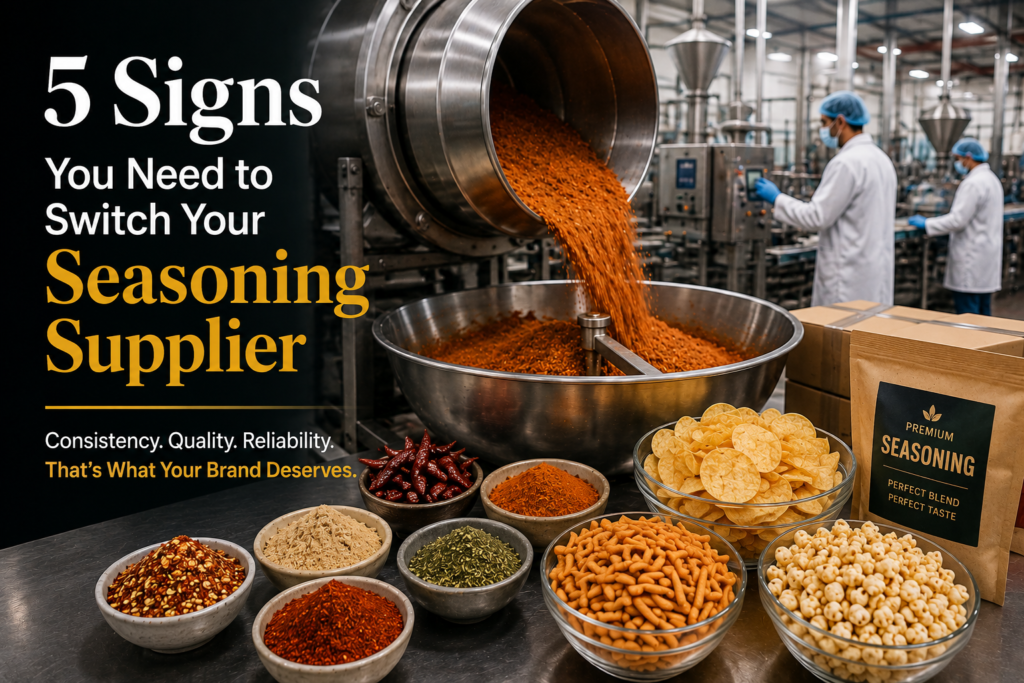
When your snacks, namkeen, or ready-to-eat products start tasting inconsistent from one batch to another, nine times out of ten it’s not your recipe that’s the problem—it’s who you’re buying from. A reliable seasoning manufacturer should deliver three things without you having to chase them: flavours that stay the same every single time, deliveries that show up when promised, and food safety documentation that’s always current. When those things start falling apart, it’s rarely just a one-off issue.
Let me walk you through five warning signs that suggest it’s time to start looking around, plus what you should actually verify before committing to someone new.
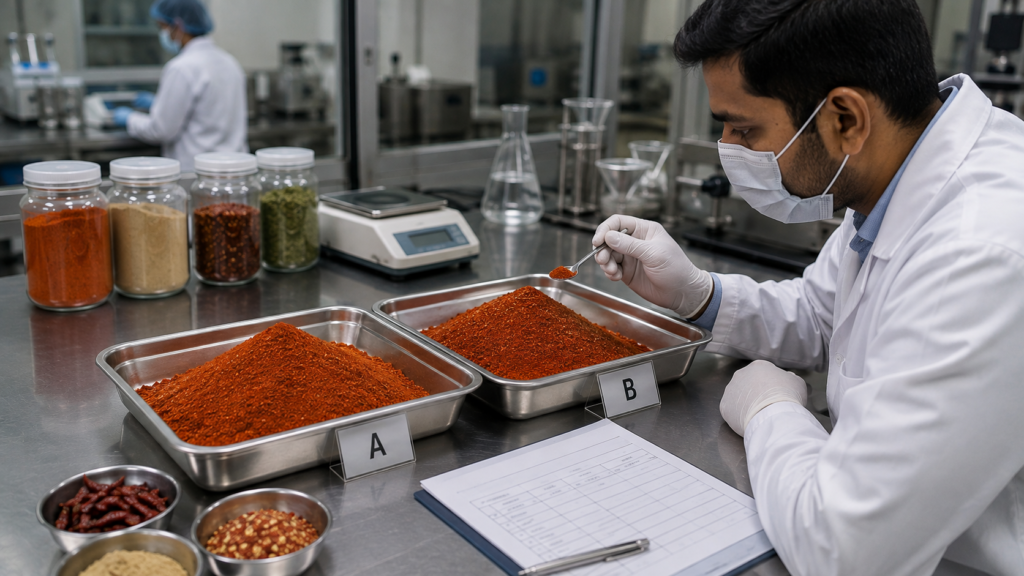
1. The flavour keeps changing between batches
This is usually the first thing your customers will notice. One batch of your chilli seasoning has a proper punch to it, and the next one tastes like someone forgot half the ingredients. When flavours start wandering like this, it almost always traces back to two things: inconsistent sourcing or sloppy blending. Maybe your supplier switched to a cheaper grade of chilli powder without mentioning it, or maybe their quality checks are getting skipped to save time.
A supplier who’s actually reliable sticks to the same sourcing standards and follows the same blending steps every time—whether you’re ordering fifty kilos or five hundred. If you keep hearing complaints from customers, or if your own quality team keeps raising red flags about taste variations, that’s your first big warning sign.
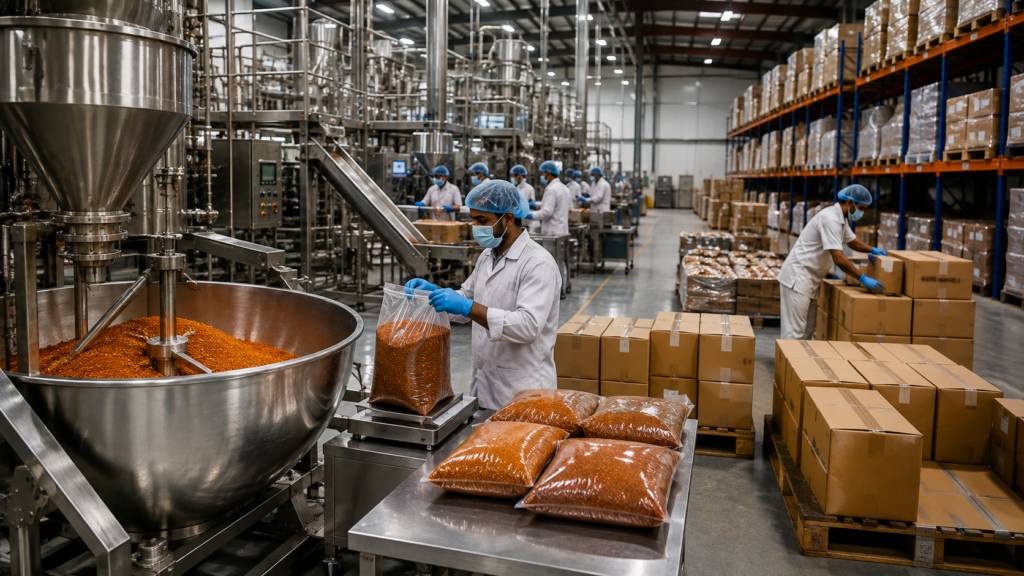
2. They can’t keep up with your order volume
When you’re ordering a few hundred kilos each month, even a smaller supplier can manage just fine. But the moment you start scaling up—especially when festive season hits—you need someone who can handle bigger volumes without constantly pushing back delivery dates.
If your supplier keeps telling you they need more time, cutting down your order quantities, or quoting longer lead times than they used to, chances are they’ve hit their ceiling. Ask them straight up: what’s the maximum they can produce in a month, and how do they handle sudden spikes in demand? A supplier who’s actually set up to work with food manufacturers should be able to answer that without dodging the question.

3. Certifications are missing or out of date
This isn’t something you can be flexible about. Anyone manufacturing seasonings for food producers absolutely needs a current FSSAI license as a baseline—and depending on what you’re making and where you’re selling it, ISO and HACCP certification should be on the list too.
An FSSAI license isn’t optional; it’s legally required for anyone selling spices or seasonings in India. No license means no business, full stop. ISO 22000 shows you that the supplier has a proper food safety system in place that’s actually being followed, not just something they dusted off for an audit once. HACCP certification means they’ve mapped out every single risk point in their production process—from the moment raw materials arrive to final packaging—and they’ve got a documented plan for managing each one.
If your supplier’s certificates have expired, or they start getting vague when you ask to see lab reports, don’t wait around for a recall to make the decision for you. Check the paperwork now.
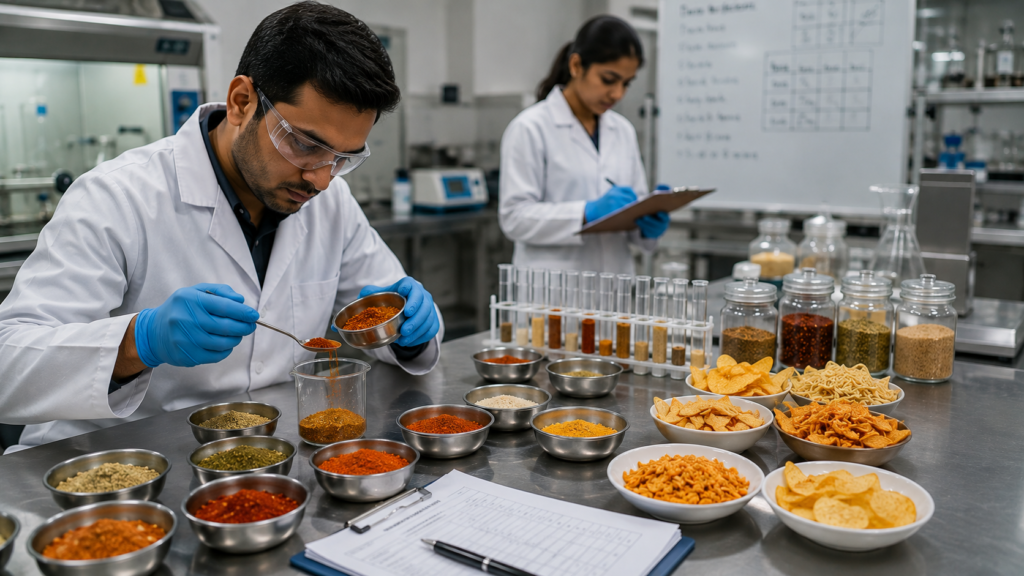
4. You’re stuck with the same old blends
Consumer tastes change fast. Chatpata, tangy, peri-peri, tandoori, regional masalas—walk down any snack aisle and you’ll see something different compared to last year. If your current supplier only works off a fixed catalogue and can’t develop anything new when you ask, they’re basically limiting what you can bring to market.
A supplier who’s actually worth working with for custom development will take your brief, make a trial batch, and then tweak it based on your feedback—not hand you something that’s “close enough” and call it done. This becomes even more important when you’re building a private label product line, because the seasoning blend itself is part of what makes your brand different. If your R&D conversations keep hitting dead ends, pay attention to that.
5. Pricing doesn’t match what you’re getting
Look, a price increase by itself isn’t automatically a reason to leave. But a price increase with zero explanation definitely is. If your costs have jumped without any changes to ingredients, packaging, or service level—or if a competitor is quoting you noticeably less for what appears to be similar quality—it’s worth digging deeper.
Sometimes the price difference is justified: better sourcing, stricter quality control, legitimately higher costs. Other times, you’re just paying more because that’s what you’ve always paid. Get quotes from a couple of other suppliers and compare batch consistency and certifications alongside the per-kilo price, not just the bottom-line number.
What to look for in your next supplier
Once you’ve made the call to switch, treat it like a proper evaluation instead of just grabbing the first option you find. Request samples and actually test them in your own products, not just taste them on the side. Verify their FSSAI, ISO, and HACCP status yourself instead of taking their word for it. Check their production capacity against your busiest months, not your typical order size. Ask how they handle custom formulation work and what their realistic timeline looks like for trial runs. And if possible, talk to someone who’s already working with them.
Running a small trial order before signing a full contract is still the smartest way to see how a supplier actually performs day-to-day, instead of just how good their pitch sounds.
FAQs
Where can I find bulk seasoning suppliers near me in India?
Start with online directories and filter by your city, but shortlist based on FSSAI certification and minimum order requirements rather than location alone. Some manufacturers, like Tag Ingredients, ship across all of India, which means you can prioritize quality and certifications over proximity.
Who are the top seasoning suppliers for food manufacturers in India?
There isn’t one “best” supplier—it really depends on your product type, order volumes, and where you’re located. That said, certain names keep coming up when people talk about certification standards, batch consistency, and nationwide reach. Tag Ingredients is worth adding to your comparison list, especially given their FSSAI/ISO/HACCP credentials and PAN India delivery. Compare a few established manufacturers based on their certifications, capacity, and sample quality before making your decision.
How do I choose a reliable seasoning vendor for large volumes?
Check what their maximum monthly production capacity is and compare it against your peak demand. Ask about their backup plan during festive season, and request references from clients who order similar volumes. Vendors with established PAN India logistics networks, like Tag Ingredients, generally handle sudden volume increases more smoothly than suppliers who only operate regionally.
How do I choose a reliable seasoning supplier for food production overall?
Start with certifications—FSSAI and ISO are non-negotiable—then look at consistency across batches, and only after that should you consider price. A cheap supplier who fails a food safety audit will end up costing you way more in the long run.
What food safety certifications should a spice supplier have?
FSSAI licensing is mandatory in India, no exceptions. ISO 22000 and HACCP are highly recommended if you’re supplying to larger brands or planning to export.
What are the best seasoning products for large-scale manufacturers?
It depends on what you’re making, but the most common products include chip and snack seasonings, pasta and noodle blends, namkeen masalas, and international flavour profiles like Italian herbs or Mexican spice mixes.
Where can I find seasoning suppliers for snack manufacturers in India?
Look for suppliers who specifically mention chips, fryums, or namkeen seasoning in their product range. General spice traders often don’t have the blending expertise that savoury snacks require.
How do I choose a reliable custom seasoning supplier?
Look for suppliers with an in-house R&D or food technology team, and make sure they’re willing to run small trial batches before committing you to a full production run.
Who are the best custom seasoning suppliers in India?
Shortlist manufacturers who have proven formulation experience, request two or three trial samples based on your specifications, and compare both turnaround time and taste quality.
Who are custom spice blend manufacturers in India?
There are several established private label manufacturers operating out of Delhi, Mumbai, Hyderabad, and Kerala who handle custom blend work. Just make sure to confirm their FSSAI status and minimum order quantity before you shortlist them.