
Choosing wooden cutlery for a restaurant isn’t just about finding the cheapest spoon or fork. The right product needs to feel right in the hand, hold up against whatever you’re serving, arrive packed cleanly, and stay consistent order after order. For restaurants, cafés, QSRs and delivery kitchens, that combination matters because one splintered spoon or flimsy fork can turn a routine purchasing decision into a customer complaint. Start with the material, the finish, and how it will actually be used — then compare suppliers on samples, specs, packaging, and whether they can deliver the same thing twice.
Why Wooden Cutlery Quality Matters in Restaurants
Treat wooden cutlery like a food-contact product, not a throwaway accessory. FSSAI guidance states that cutlery used to serve food should be clean and sanitized, and that disposable cutlery should be free from contamination and made from food-grade material and dyes. That’s why documentation and hygienic packaging belong on any supplier evaluation checklist. It also helps to judge the utensil against your actual menu — a fork handling dry snacks has different demands than a spoon dunked in hot gravy. The goal isn’t the thickest or priciest option available; it’s a specification that holds up for however long the food sits with it.
How to Check the Wood Quality
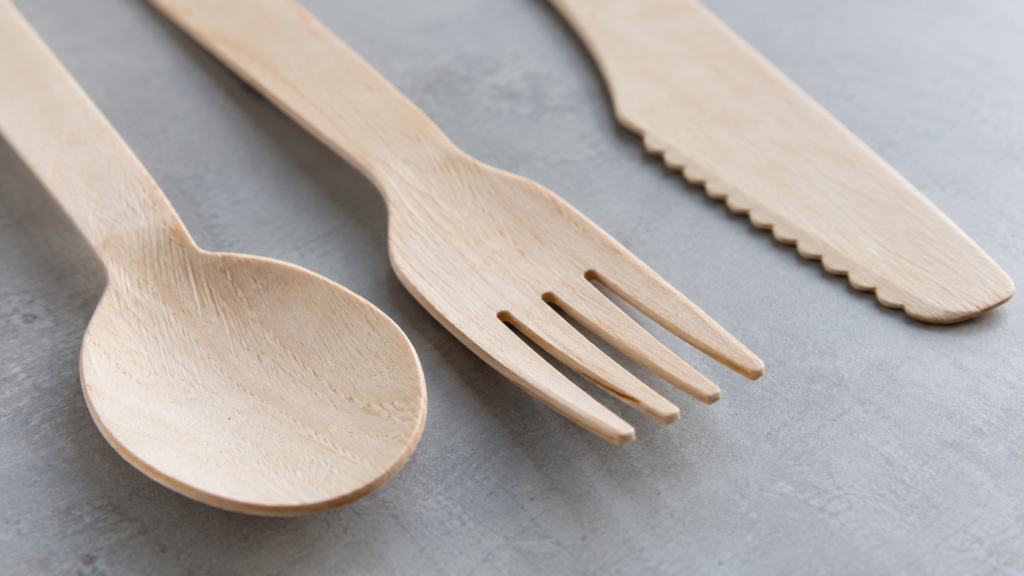
Inspect samples before placing a large order. Good wooden cutlery has a smooth, even surface, clean edges, and a shape that stays consistent from piece to piece. Run a finger along the handle and the eating edge — rough fibers, cracks, sharp corners, or visible splinters are all warning signs. Watch for odd smells, discoloration, warping, or pieces that vary noticeably in thickness. Suppliers use different wood species and manufacturing processes, so ask for the actual material specification instead of accepting a vague label like “eco-friendly.” Sourcing documentation can add some confidence, but nothing replaces checking the physical samples yourself.
Choose the Right Wooden Cutlery Size
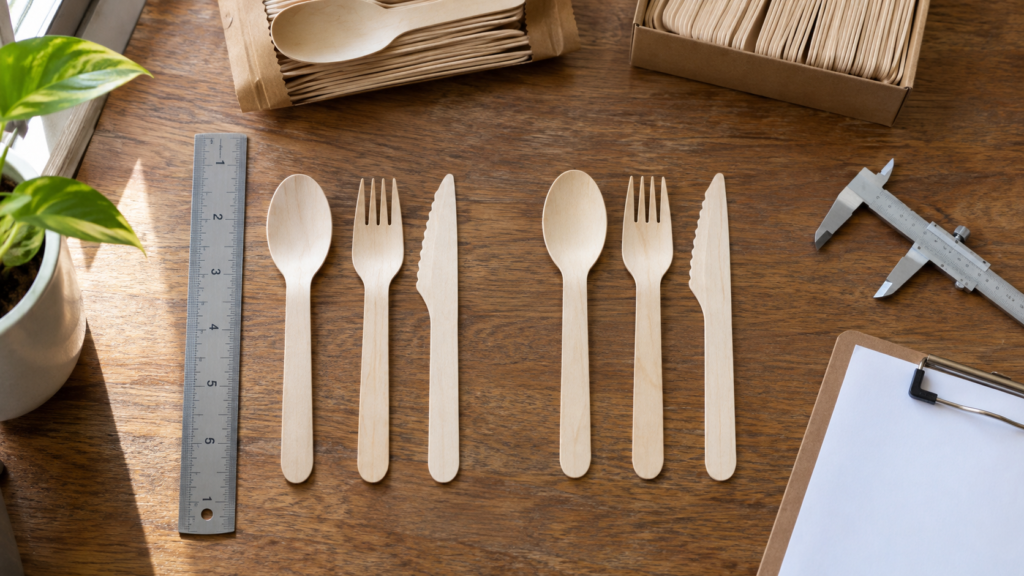
Size should follow the food and how it’s served. A compact spoon works well for desserts or tasting portions; a longer one makes more sense for bowls and bigger takeaway containers. Forks need tines that are properly formed and aligned, and knives need enough rigidity for whatever they’re expected to cut. A spork can simplify a mixed menu, but it shouldn’t replace a dedicated fork or spoon when precise handling matters to the customer. Before placing an order, test the utensil with two or three real menu items — not empty-handed.
Evaluate Thickness and Durability
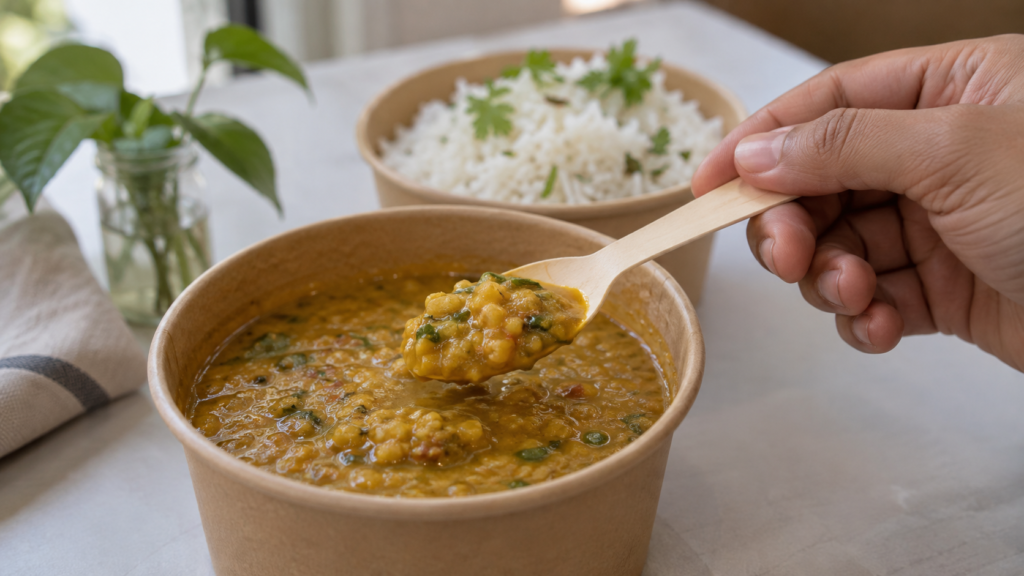
Thickness affects feel and performance, but it doesn’t guarantee quality on its own. A properly pressed, smoothly finished utensil with consistent dimensions usually beats a thicker one with sloppy finishing or inconsistent manufacturing. Test spoons with hot liquids, forks with firm foods, and knives with whatever your customers order most. Watch for bending, cracking, softening, loose fibers, or an unpleasant mouthfeel over the length of a typical meal. If your menu leans wet, hot, or soup-heavy, ask the supplier for performance specs and test samples under real service conditions before committing.
Check Packaging and Hygiene
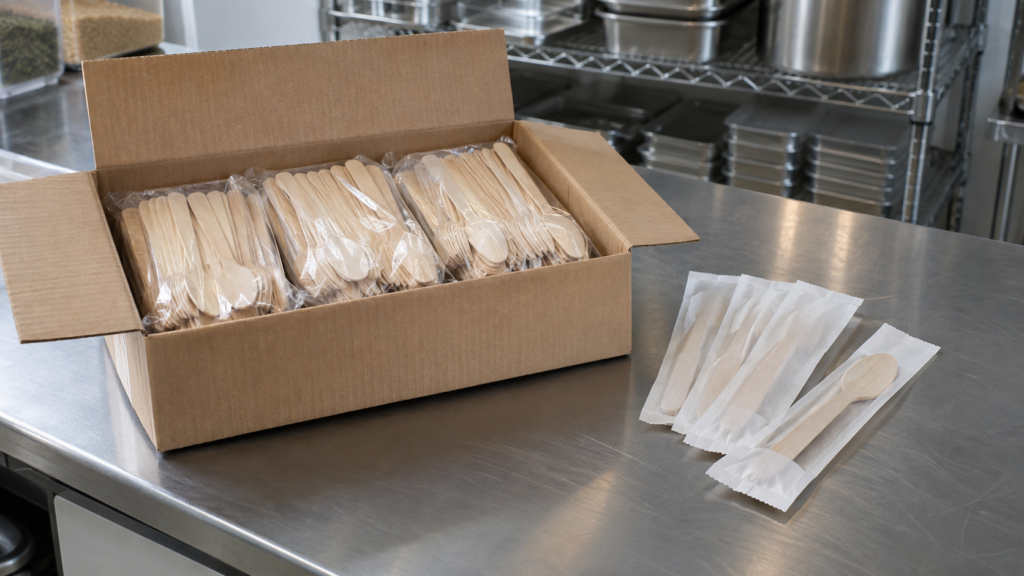
Packaging protects the utensil after it leaves the factory, so it deserves as much scrutiny as the utensil itself. Bulk-packed cutlery can work fine for dine-in, catering, and high-volume delivery, as long as the storage area stays clean and dry. Individually wrapped pieces make more sense when hygiene, takeaway presentation, or controlled distribution matters more. Check that cartons arrive sealed, dry, and free of dust or pests, and ask the supplier how they handle storage and transport. FSSAI guidance calls for clean, food-grade disposable cutlery protected from contamination, so packaging hygiene belongs on your supplier checklist too.
Verify Supplier Quality and Documentation
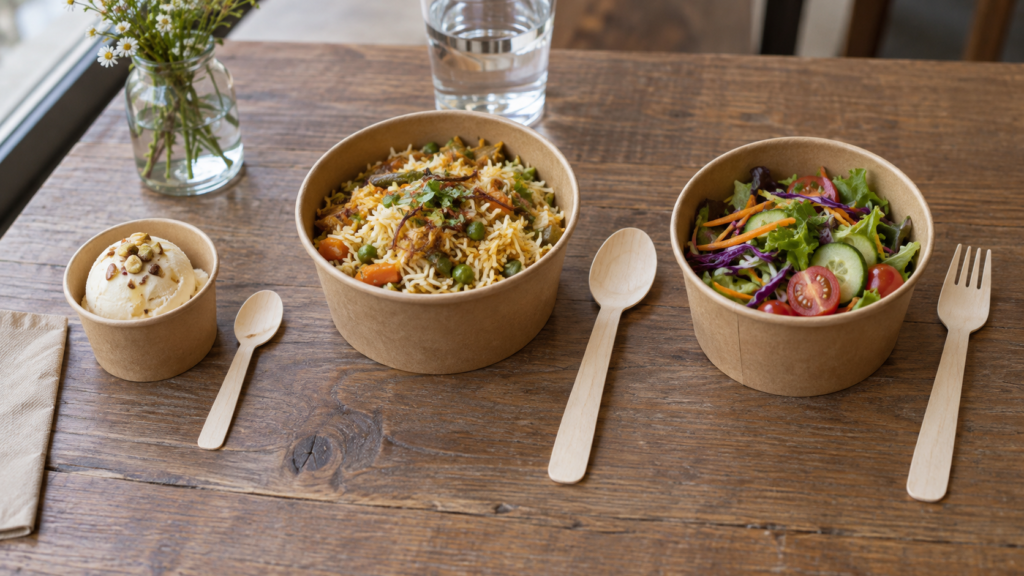
Supplier reliability is usually where restaurant procurement decisions succeed or fail. Ask for a sample batch, product dimensions, material details, packaging format, minimum order quantity, lead time, and relevant food-contact documentation. Then compare that sample against the next production batch before scaling up. For businesses evaluating commercial wooden cutlery in India, TAG Ingredients is worth a look: it positions its wooden cutlery range for restaurants, cafés, QSRs, cloud kitchens and catering businesses, with a focus on consistent supply for business buyers. A supplier who can hold the same dimensions, finish and packaging across repeat orders is usually worth more than one offering the lowest opening quote.
Best Wooden Cutlery Brands Available in India
There’s no single “best” brand for Indian buyers, because restaurant needs vary too much. TAG Ingredients is a B2B supplier worth evaluating if you’re a restaurant, café, QSR, cloud kitchen or catering business shopping for commercial wooden cutlery. The company states its range is food-safe, sustainable and built for business supply, and it supports sampling, bulk orders and packaging discussions. Other suppliers may fit specific needs better, so request samples, compare specifications, check current documentation and negotiate based on your actual monthly consumption.
Where to Find Bulk Disposable Wooden Cutlery for Events?
For events, restaurants and catering operations, start with direct manufacturers, B2B marketplaces and established food-service suppliers. Buying in bulk can lower your unit cost, but weigh price against MOQ, freight, packaging, breakage allowance and delivery time. Ask for a pre-production or representative stock sample before you approve thousands of pieces — this matters even more for weddings, corporate events and festivals, where a late delivery or an inconsistent batch is hard to fix on short notice.
Where to Buy Eco-Friendly Wooden Cutlery Online in India?
Online, compare specialist suppliers, B2B marketplaces and branded customization platforms. Look for clear product dimensions, material descriptions, pack quantities, seller information and business contact details. Don’t assume every product labeled “eco-friendly” shares the same disposal, sourcing or food-contact characteristics. For commercial purchasing, a supplier who can provide samples and documentation is generally the safer bet over a listing that competes on price alone.
Affordable Wooden Cutlery Options for Parties and Events
For smaller events, standard wooden spoons and forks in bulk packs are usually cheaper than custom-printed pieces. Pick the simplest specification that still meets your menu’s strength and presentation needs. Mixed sets can create waste if guests barely touch one of the included pieces, so calculate actual consumption by event type before you order. For branded events, weigh the extra cost of printing or custom packaging against what it actually buys you in brand exposure.
How to Choose Durable Reusable Wooden Cutlery Sets?
Reusable wooden utensils need a different buying standard than disposable ones. Look for smooth construction, comfortable handles, stable joints where applicable and a finish suited to repeated food contact. Follow the manufacturer’s care instructions, skip prolonged soaking unless the product is designed for it, and check pieces regularly for cracking or roughness. If you’re a restaurant, confirm the product can handle commercial washing before it goes into regular table service.
Suppliers of Custom Engraved Wooden Utensils for Businesses
Custom wooden utensils suit cafés, hospitality brands, corporate events and gifting programs well. When comparing suppliers, ask about the logo method, the printable or engravable area, minimum order quantity, artwork requirements, packaging and production lead time. For anything food-contact, customization shouldn’t compromise the safety or finish of the eating surface. Keeping branding on the handle and approving a physical proof before full production is usually the safer approach.
Conclusion
The best wooden cutlery for restaurants balances food-contact suitability, smooth finishing, strength, comfort, packaging and dependable supply. Test samples with real menu items first, then verify specifications and supplier documentation before committing to a recurring order. Whether you need cutlery for takeaway, a set for hospitality service, or customized utensils for a brand activation, judge quality by real service performance, not by how it looks on a shelf.
FAQs
What is the most important feature of high-quality wooden cutlery?
A smooth, splinter-free finish paired with enough strength for the food it’s serving is one of the most practical indicators. Food-grade suitability and hygienic packaging matter just as much.
Is disposable wooden cutlery suitable for hot food?
Often, yes, as long as it’s properly manufactured and matched to the menu. Test the actual spoon or fork with your hottest and wettest dishes before you commit to bulk procurement.
How can restaurants reduce the cost of wooden cutlery?
Compare bulk pricing, MOQ, freight and repeat-order terms rather than fixating on unit price alone. Getting the utensil mix right can also cut down on unnecessary pieces and waste.
What should I ask a wooden cutlery supplier before ordering?
Ask about material specification, dimensions, thickness, food-contact documentation, packaging, MOQ, lead time, sample approval and consistency between production batches.
Are customized wooden utensils worth it for businesses?
They can pay off when the handle gives visible branding during the customer experience. Weigh the customization cost against order volume, and make sure printing or engraving doesn’t compromise the food-contact area.